FDAApproved
Regulatory Status
June 21, 2019 as Vyleesi
⚠️ FOR RESEARCH PURPOSES ONLY — This compound is not FDA approved. All data presented is from clinical trials for educational reference.

Blood flow Peptide
A 7-amino acid cyclic peptide analog of alpha-MSH that activates melanocortin receptors MC3R and MC4R, FDA-approved for hypoactive sexual desire disorder and studied for sexual function in clinical research. Premium Research Peptide.
FDAApproved
Regulatory Status
June 21, 2019 as Vyleesi
1,247patients
Phase 3 Trials
RECONNECT studies
0.35increase
Desire Score
FSFI-D vs placebo
MC4Ragonist
Mechanism
Melanocortin receptor activation
7amino acids
Cyclic Peptide
Active metabolite of MT-II
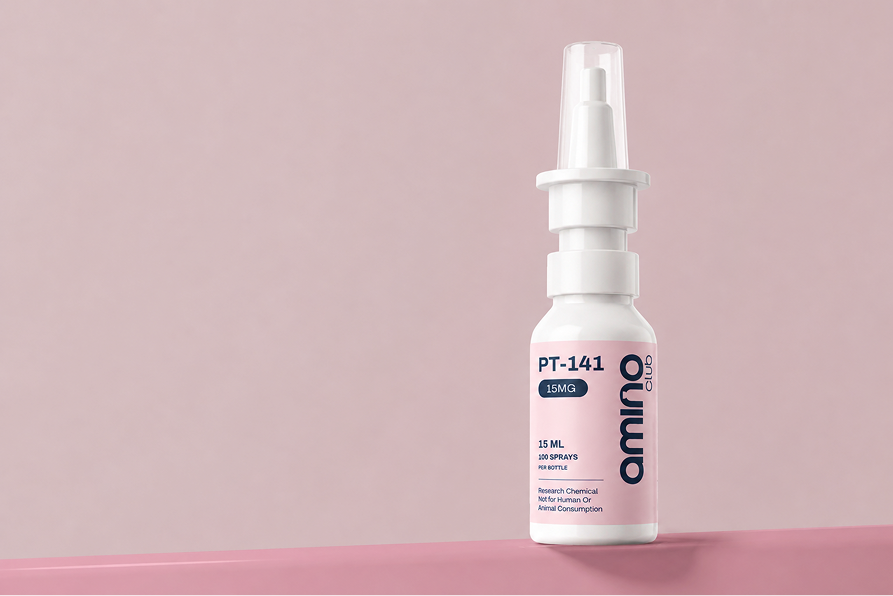
PT-141 (Bremelanotide) is a synthetic cyclic heptapeptide that activates melanocortin receptors MC3R and MC4R in the central nervous system. Unlike PDE5 inhibitors (Viagra, Cialis) that work on blood flow, PT-141 works directly on the brain pathways involved in sexual desire and arousal. It is an active metabolite of Melanotan II, differing only by lacking the C-terminal amide group.
Melanocortin Receptor Type 4
Activates sexual arousal pathways in hypothalamus
Increases sexual desire and motivation
Modulates dopaminergic signaling
Melanocortin Receptor Type 3
Contributes to sexual response
Involved in energy homeostasis
Modulates limbic system activity
Nitric Oxide Release
Downstream vasodilation effects
Supports physiological arousal
Complements central action
PT-141 works differently from erectile dysfunction drugs. It activates melanocortin receptors in the hypothalamus to enhance sexual desire at its source — the brain — rather than just improving blood flow.
Key distinction: Unlike Viagra/Cialis (PDE5 inhibitors) that require sexual stimulation and work on blood vessels, PT-141 activates the neural pathways that generate sexual desire itself
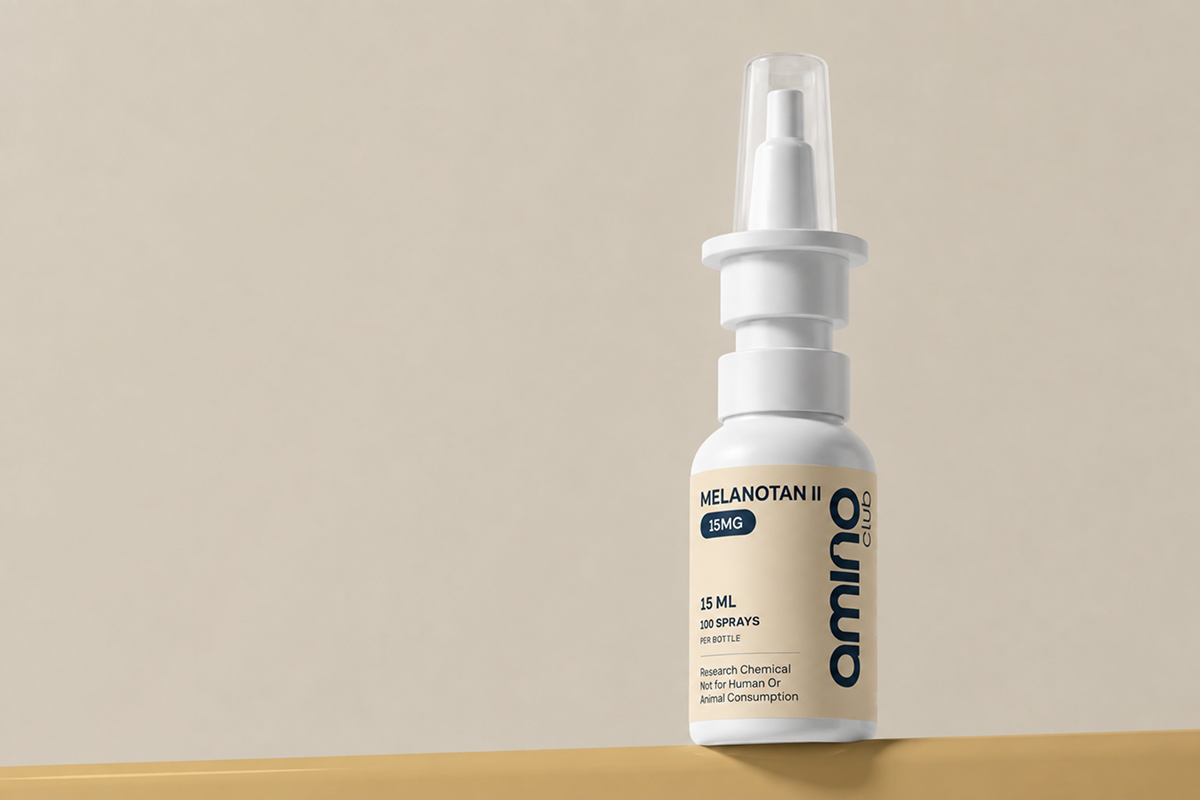
PT-141 is the active metabolite of Melanotan II (MT-II), created when the body removes the C-terminal amide group. This modification focuses the peptide's activity on sexual function while reducing tanning effects.
FDA-approved based on Phase 3 clinical trials
Enrolled in Phase 3 RECONNECT Trials
Trial details: Participants received bremelanotide 1.75 mg subcutaneously as needed for 24 weeks. Both studies showed statistically significant improvements in sexual desire (P<.001) and reductions in distress related to low sexual desire compared to placebo.
Results from Phase 3 clinical program
Unique mechanism: PT-141 is the first FDA-approved drug for HSDD that works through the central nervous system via melanocortin receptors, rather than through peripheral mechanisms.
Research applications and observed effects
Works on brain pathways
SourceResearch in men and women
SourceUse when desired
SourceAlternative for non-responders
SourcePT-141 significantly improves sexual desire by activating melanocortin receptors in the hypothalamus, addressing the neurological basis of low libido
Clinical evidence: Both RECONNECT Phase 3 trials demonstrated statistically significant improvements in sexual desire (P<.001)
PT-141 has been studied for male erectile dysfunction, including in men who did not respond to PDE5 inhibitors, offering an alternative mechanism
PT-141 is administered as needed, with effects typically beginning within 45-60 minutes after subcutaneous injection
Unlike drugs that enhance blood flow, PT-141 activates the brain circuits responsible for generating sexual desire and arousal
Primary site of action
Key advantage: Works at the level of desire generation, not just physical response, addressing the psychological component of sexual function
Safety profile from FDA approval studies
The most common side effects in clinical trials were nausea, flushing, headache, and injection site reactions. Most adverse events were mild to moderate and related to tolerability. PT-141 may cause temporary increases in blood pressure.
PT-141 may cause temporary increases in blood pressure and decreases in heart rate. These effects are transient but may be concerning for those with cardiovascular conditions.
Most discontinuations due to tolerability
Nausea was main reason for stopping
Side effects generally mild to moderate
May cause focal hyperpigmentation (darkening) of skin
Facial hyperpigmentation reported in clinical trials
Hyperpigmentation may not fully resolve after stopping
Blood pressure monitoring recommended in at-risk patients
Technical specifications
Cyclic heptapeptide analog of alpha-MSH, active metabolite of Melanotan II
Handle with care to maintain potency
Developed by Palatin Technologies, approved by FDA
Common questions about PT-141 research
PT-141 (Bremelanotide) is a cyclic heptapeptide that is the active metabolite of Melanotan II (MT-II). When the body processes Melanotan II, it removes the C-terminal amide group to create PT-141. This modification focuses the peptide's activity on melanocortin receptors MC3R and MC4R involved in sexual function, while reducing the tanning (melanogenesis) effects associated with MT-II. PT-141 is FDA-approved as Vyleesi for treating hypoactive sexual desire disorder in premenopausal women.
PT-141 works through a completely different mechanism than PDE5 inhibitors like Viagra (sildenafil) or Cialis (tadalafil). While PDE5 inhibitors work on blood vessels to improve erection by enhancing blood flow, PT-141 works in the central nervous system by activating melanocortin receptors in the hypothalamus to enhance sexual desire itself. This makes PT-141 a potential option for individuals who don't respond to PDE5 inhibitors, as it addresses the psychological/neurological component of sexual function rather than just the physical response.
Two identical Phase 3 trials (RECONNECT) enrolled 1,247 premenopausal women with hypoactive sexual desire disorder. Women received bremelanotide 1.75 mg subcutaneously as needed for 24 weeks. Both studies showed statistically significant improvements in sexual desire (measured by FSFI-D: +0.30 to +0.42 points, P<.001) and significant reductions in distress related to low sexual desire (FSDS-DAO: -0.29 to -0.37 points, P<.005) compared to placebo. These results led to FDA approval in June 2019.
PT-141 is FDA-approved only for premenopausal women with HSDD (as Vyleesi). It is not approved for use in men. However, it has been studied in men with erectile dysfunction, including those who did not respond to PDE5 inhibitors, and showed efficacy through its CNS mechanism. For men, PT-141 remains a research compound and is not FDA-approved for any male indication.
PT-141 is administered as a subcutaneous injection at least 45 minutes before anticipated sexual activity. The FDA-approved dose is 1.75 mg, with a maximum of one dose per 24 hours and no more than 8 doses per month recommended. It is available as a single-dose auto-injector (Vyleesi) for home use. The injection is typically given in the abdomen or thigh.
The most common side effects in clinical trials were nausea (40%), flushing (20%), injection site reactions (13%), and headache (11%). Most adverse events were mild to moderate. PT-141 may also cause temporary increases in blood pressure and decreases in heart rate, which is why it's contraindicated in uncontrolled hypertension. Focal hyperpigmentation (skin darkening) has also been reported and may not fully resolve after stopping treatment.
PT-141 typically begins working within 45-60 minutes after subcutaneous injection, with peak effects occurring around 2 hours. The effects may last up to 24 hours. This is why it's recommended to administer the injection at least 45 minutes before anticipated sexual activity. The half-life is approximately 2.7 hours.
Yes, PT-141 can cause focal hyperpigmentation (darkening of skin), though this effect is less pronounced than with Melanotan II. In clinical trials, hyperpigmentation of the face, gums, and breasts was reported. This darkening may not fully resolve after discontinuing the medication. If you develop new or worsening dark spots while using PT-141, you should consult a healthcare provider.
Peer-reviewed research
Kingsberg SA, Clayton AH, Portman D, et al.
Diamond LE, Earle DC, Rosen RC, et al.
Diamond LE, Earle DC, Heiman JR, et al.
Not for human consumption. This product is sold exclusively for research and educational purposes. It is not intended to diagnose, treat, cure, or prevent any disease.
All clinical trial data and research findings presented on this page are sourced from peer-reviewed journals and official publications. They are provided for educational reference only and should not be interpreted as medical advice or product claims.
By purchasing this product, you confirm that you are a qualified researcher and will use it in accordance with all applicable laws and regulations.
Melanocortin receptor peptides