7×
β3-AR Upregulation
Fat-burning receptors
⚠️ FOR RESEARCH PURPOSES ONLY — This compound is not FDA approved. All data presented is from clinical trials for educational reference.
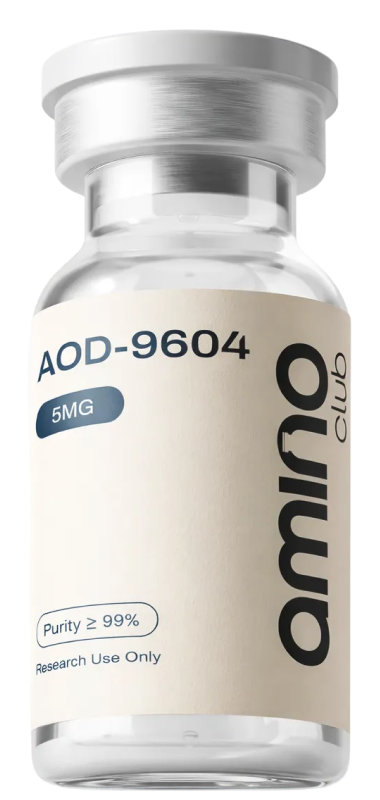
Metabolic/Weight Loss Peptide
A 15-amino acid lipolytic peptide that stimulates the breakdown or destruction of fat cells (lipolysis) and inhibits the metabolic formation of fat (lipogenesis) in animal studies. Premium Research Peptide.
7×
β3-AR Upregulation
Fat-burning receptors
70%
Cartilage Regeneration
Rabbit OA model
2.8kg
Weight Loss
12 weeks, 1mg daily
100%
Blood Sugar Safe
No glucose impact
0%
Antibodies Formed
No immunogenicity
Unlike full growth hormone (which affects blood sugar and muscle growth), AOD-9604 contains only the fat-burning portion of hGH. This 15-amino acid fragment activates lipolysis (fat breakdown) while inhibiting lipogenesis (fat creation) without the side effects of full hGH treatment.
Beta-3 Adrenergic Receptors
Increases fat oxidation
Enhances lipolytic sensitivity
Upregulates β3-AR expression
Hormone-Sensitive Lipase
Breaks down stored fat
Releases fatty acids
Reduces adipose tissue
AOD-9604 mimics only the lipolytic (fat-burning) effects of human growth hormone without affecting blood sugar, insulin sensitivity, or IGF-1 levels — making it potentially safer than full hGH treatment.
No systemic effects: Studies confirmed AOD-9604 does not affect carbohydrate metabolism or produce anti-AOD9604 antibodies, addressing major concerns with hGH therapy.
Beyond fat loss, AOD-9604 has shown promising results for joint health in preclinical studies.
Osteoarthritis research: Intra-articular AOD-9604 injections enhanced cartilage regeneration by 70% in rabbit models, with even better results when combined with hyaluronic acid.
Summary of clinical trial findings
Average Weight Lost at 1mg Daily
Trial context: While initial 12-week trials showed modest weight loss, the 24-week Phase 2b OPTIONS study did not meet commercial viability endpoints. However, the compound demonstrated an excellent safety profile.
Data from multiple human and animal studies
Important context: AOD-9604 development for obesity was discontinued after Phase 2b, but research continues for joint health and other metabolic applications.
Note: Comparisons from different trials should be interpreted cautiously. Orlistat data from separate meta-analysis.
Other benefits observed in research
Enhanced cartilage repair in OA models
Kwon et al., 2015No effect on blood sugar levels
Stier et al., 2013Upregulated fat-burning receptors
Heffernan et al., 2001Placebo-like side effect profile
Multiple trialsPreclinical studies show promising results for osteoarthritis treatment through direct cartilage repair mechanisms.
Research finding: Intra-articular AOD-9604 injections using ultrasound guidance showed superior results when combined with hyaluronic acid versus either treatment alone.
Increases fat burning without affecting muscle mass or blood sugar regulation.
Six human clinical trials have consistently shown AOD-9604 to be safe and well-tolerated.
Patients studied with no serious adverse events
Key safety findings: No anti-AOD9604 antibodies detected, no impact on IGF-1 levels, no effect on carbohydrate metabolism, indistinguishable from placebo in side effects.
From clinical trial protocols
AOD-9604 has been studied via multiple administration routes with different dosing protocols for weight loss versus joint applications.
Oral administration for obesity treatment
0.25-1mg
Once daily
Oral administration
0.25-1mg
Once daily
Extended treatment phase
Three dose levels tested: 0.25mg, 0.5mg, and 1mg daily
No dose-dependent response observed above 0.25mg
Taken as oral formulation once daily
No food restrictions reported
Intra-articular injection for osteoarthritis
0.25mg
Weekly injection
Intra-articular
0.25mg
Weekly injection
Optional extension
0.25mg + 6mg HA
Weekly
Enhanced protocol
Ultrasound-guided injection recommended
Can be combined with hyaluronic acid for enhanced effect
Lower dose than systemic administration
Modified C-terminal prevents rapid degradation
Oral bioavailability improved versus native peptide
No accumulation observed with daily dosing
What clinical studies report
AOD-9604 demonstrated an excellent safety profile across all human trials, with side effects comparable to placebo.
Unlike full hGH, AOD-9604 showed no effect on:
Discontinuation rates similar to placebo
No serious adverse events reported
Most discontinuations unrelated to treatment
Technical specifications
Common questions about AOD-9604 research
AOD-9604 is a modified 15-amino acid fragment of human growth hormone (hGH 177-191) with an added tyrosine at the N-terminus. It was developed by Metabolic Pharmaceuticals as an anti-obesity drug that would provide the fat-burning benefits of hGH without its negative effects on blood sugar and IGF-1 levels.
Initial 12-week trials showed modest weight loss of 2.6-2.8 kg compared to 0.8 kg with placebo. However, the pivotal 24-week Phase 2b OPTIONS study with over 300 patients did not meet commercial viability endpoints for obesity treatment, leading to discontinuation of development for this indication in 2007.
Yes, AOD-9604 demonstrated an excellent safety profile across 6 human clinical trials with over 600 subjects. It showed no serious adverse events, no effect on blood glucose or IGF-1 levels, and no development of anti-AOD9604 antibodies. Side effects were mild and comparable to placebo.
Beyond weight loss, AOD-9604 has shown promising results for cartilage regeneration and osteoarthritis treatment in preclinical studies. Intra-articular injections enhanced cartilage repair by 70% in rabbit models, with even better results when combined with hyaluronic acid.
AOD-9604 contains only the lipolytic (fat-burning) portion of hGH without the portions that affect blood sugar, muscle growth, or IGF-1 production. This selective action means it doesn't cause the side effects associated with full hGH treatment like insulin resistance, fluid retention, or carpal tunnel syndrome.
AOD-9604 is not approved for human use by the FDA or any other regulatory agency. It remains a research compound only. Additionally, it has been prohibited by the World Anti-Doping Agency (WADA) since 2013, making it banned for use in competitive sports.
Peer-reviewed research
Heffernan M et al.
Kwon DR et al.
Not for human consumption. This product is sold exclusively for research and educational purposes. It is not intended to diagnose, treat, cure, or prevent any disease.
All clinical trial data and research findings presented on this page are sourced from peer-reviewed journals and official publications. They are provided for educational reference only and should not be interpreted as medical advice or product claims.
By purchasing this product, you confirm that you are a qualified researcher and will use it in accordance with all applicable laws and regulations.
Stier H et al.