3
Pathways
VEGF + Actin + Collagen synergy
⚠️ FOR RESEARCH PURPOSES ONLY — This compound is not FDA approved. All data presented is from clinical trials for educational reference.
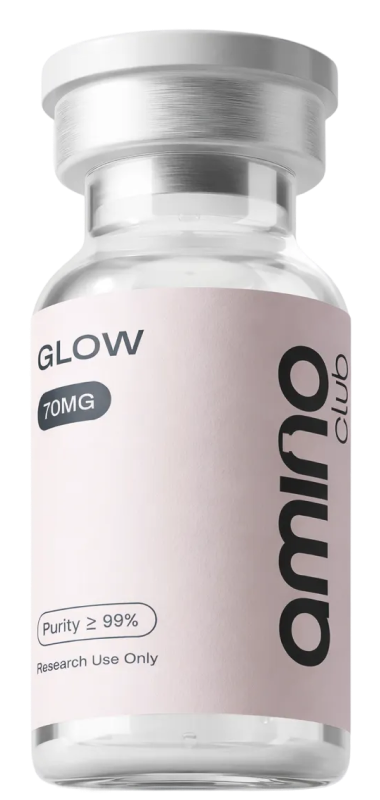
Regenerative Peptide Blend
A triple-peptide combination of BPC-157, TB-500, and GHK-Cu targeting complementary angiogenic, cellular migration, and extracellular matrix remodeling pathways in preclinical research. Premium Research Peptide.
3
Pathways
VEGF + Actin + Collagen synergy
7×
GHR Upregulation
BPC-157 by day 3
70%
Collagen Increase
GHK-Cu vs controls
61%
Faster Healing
TB-500 re-epithelialization
500+
Combined Studies
Across all three peptides
GLOW combines three well-researched peptides that target distinct but complementary regenerative mechanisms. BPC-157 promotes angiogenesis through VEGF pathways, TB-500 enhances cell migration via actin regulation, and GHK-Cu stimulates collagen synthesis and gene expression. Together, they address tissue repair at multiple biological levels.
Vascular Endothelial Growth Factor (BPC-157)
Promotes blood vessel formation
Enhances tissue granulation
Modulates nitric oxide signaling
Thymosin Beta-4 Pathway (TB-500)
Increases cell migration
Supports cytoskeletal remodeling
Reduces fibrotic scarring
Copper Peptide Signaling (GHK-Cu)
Stimulates type I & III collagen
Modulates 4,000+ genes
Delivers copper to cells
Each peptide in GLOW addresses a different phase of tissue repair. BPC-157 initiates vascular support and blood flow to damaged areas. TB-500 mobilizes repair cells through enhanced migration. GHK-Cu provides the collagen framework and gene activation for structural rebuilding.
Multi-phase healing: Research suggests combining these pathways may produce synergistic effects greater than any single peptide alone.
Combined preclinical data from component peptides
Pathways Targeted Simultaneously
Combined research: Data aggregated from individual peptide studies in animal models. BPC-157: 200+ studies, TB-500: 170+ studies, GHK-Cu: 130+ studies.
Key findings from each peptide's research literature
Research note: These findings are from individual peptide studies. Combination effects are based on mechanistic synergy, not direct clinical trials of the blend.
Areas studied in preclinical models
GHK-Cu promotes collagen synthesis, while BPC-157 and TB-500 support epithelial repair and reduce scarring
Pickart & Margolina 2018TB-500 facilitates actin remodeling; BPC-157 promotes tendon fibroblast viability; GHK-Cu supports vascular stabilization
Chi et al. 2017All three peptides demonstrate anti-inflammatory properties through different mechanisms in animal models
Hsieh et al. 2016Coordinated extracellular matrix deposition and degradation for functional, less fibrotic tissue regeneration
Brcic et al. 2011The GLOW blend is studied in preclinical skin models for effects on dermal remodeling, wound closure, and barrier restoration. GHK-Cu promotes collagen synthesis while BPC-157 and TB-500 support epithelial repair.
In musculoskeletal research, GLOW is applied to models involving soft tissue injuries, overuse syndromes, and post-surgical recovery. Each peptide contributes unique repair mechanisms.
All three peptides demonstrate anti-inflammatory and antioxidant properties. GHK-Cu chelates free copper ions and downregulates TNF-α/IL-6. BPC-157 stabilizes nitric oxide pathways. TB-500 modulates macrophage activity.
Anti-inflammatory pathways
Net effect: A more controlled inflammatory environment conducive to healing rather than chronic inflammation.
An emerging research area explores the blend's potential for peripheral nerve regeneration. TB-500 and BPC-157 contribute to endothelial repair, while GHK-Cu supports capillary growth and tissue perfusion.
From preclinical studies and research protocols
GLOW combines three peptides with different pharmacokinetic profiles. Research protocols vary based on the model being studied. Individual component dosing has been more extensively characterized than combination protocols.
Standard research doses for each peptide based on published literature
200-500mcg
1-2x daily
Standard preclinical range
2-5mg
2x weekly
Loading then maintenance
1-2mg
Daily
GHK-Cu topical or injection
Doses from individual peptide studies, not combination protocols
Actual blend ratios may vary by manufacturer
Research protocols should be designed based on specific models
Each component has different stability and PK profiles
Combination may require special formulation considerations
Store lyophilized powder at -20°C for long-term stability
What preclinical studies report for each component
Each peptide in the GLOW blend has been individually studied for safety. BPC-157 has shown no LD50 in toxicity studies. TB-500 and GHK-Cu are well-tolerated in animal models. Combined effects require further investigation.
Individual peptides have favorable safety profiles in research
Combination safety requires specific investigation
Human clinical data is limited for all three peptides
BPC-157: Investigational, preclinical research compound
TB-500: Investigational, WADA prohibited substance (S0 category)
GHK-Cu: Cosmetic ingredient with research applications
No FDA approval for any therapeutic indication
Technical specifications for each component
Common questions about GLOW research
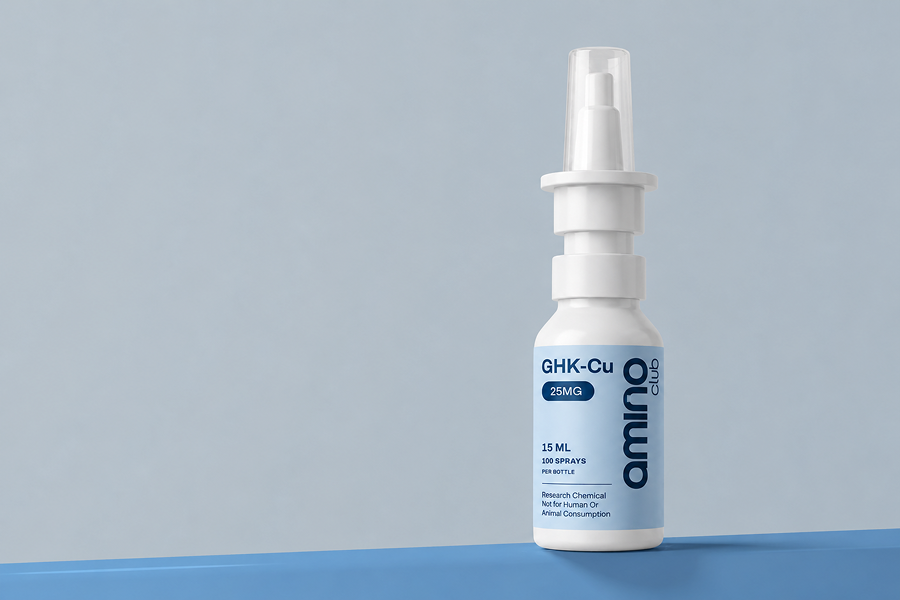
GLOW is a triple-peptide blend containing BPC-157 (a 15-amino acid gastric peptide), TB-500 (a 43-amino acid thymosin beta-4 fragment), and GHK-Cu (a copper tripeptide). Each peptide targets different but complementary regenerative mechanisms, making the combination relevant for multi-pathway tissue repair research.
The Wolverine Stack contains only BPC-157 and TB-500, focusing on angiogenesis and cell migration. GLOW adds GHK-Cu, which brings collagen synthesis, gene modulation (4,000+ genes), and copper delivery mechanisms. This third component extends the blend's research applications to include skin regeneration, anti-aging pathways, and extracellular matrix remodeling.
Individually, these peptides have extensive preclinical research: BPC-157 has 200+ publications studying wound healing, GI protection, and tissue repair; TB-500 has 170+ publications on cell migration and musculoskeletal healing; GHK-Cu has 130+ publications on collagen synthesis, gene expression, and skin regeneration. Combination research is emerging but less extensive.
No. All three peptides are research compounds. BPC-157 and TB-500 are investigational peptides with no FDA approval and are banned by WADA. GHK-Cu is used in cosmetic formulations but is not approved as a therapeutic. GLOW is intended for laboratory and preclinical research applications only.
The three peptides target overlapping but distinct pathways: (1) Angiogenesis — BPC-157 (VEGF) and GHK-Cu (capillary growth) promote blood vessel formation; (2) Cell migration — TB-500 regulates actin for cellular movement; (3) ECM remodeling — GHK-Cu stimulates collagen while TB-500 reduces fibrosis; (4) Anti-inflammatory — all three modulate inflammatory mediators through different mechanisms.
Lyophilized (powder) form should be stored at -20°C for long-term stability. Once reconstituted, store at 2-8°C (refrigerated) and use within 7 days. Protect from light and avoid repeated freeze-thaw cycles. Each component has slightly different stability profiles, so follow manufacturer guidelines for specific formulations.
GLOW is studied in preclinical models for: (1) Skin regeneration and dermal remodeling; (2) Muscle and tendon repair; (3) Wound healing and tissue recovery; (4) Anti-inflammatory applications; (5) Extracellular matrix restoration. The combination approach targets multiple phases of the healing cascade simultaneously.
Peer-reviewed research
Pickart L, Margolina A
Not for human consumption. This product is sold exclusively for research and educational purposes. It is not intended to diagnose, treat, cure, or prevent any disease.
All clinical trial data and research findings presented on this page are sourced from peer-reviewed journals and official publications. They are provided for educational reference only and should not be interpreted as medical advice or product claims.
By purchasing this product, you confirm that you are a qualified researcher and will use it in accordance with all applicable laws and regulations.
Chi NC et al.
Malinda KM et al.