Selective
GH Release
No cortisol/prolactin spike
⚠️ FOR RESEARCH PURPOSES ONLY — This compound is not FDA approved. All data presented is from clinical trials for educational reference.
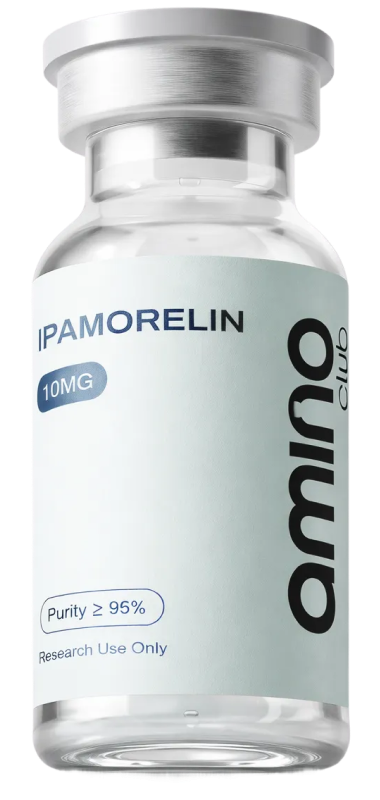
GH Secretagogue Peptide
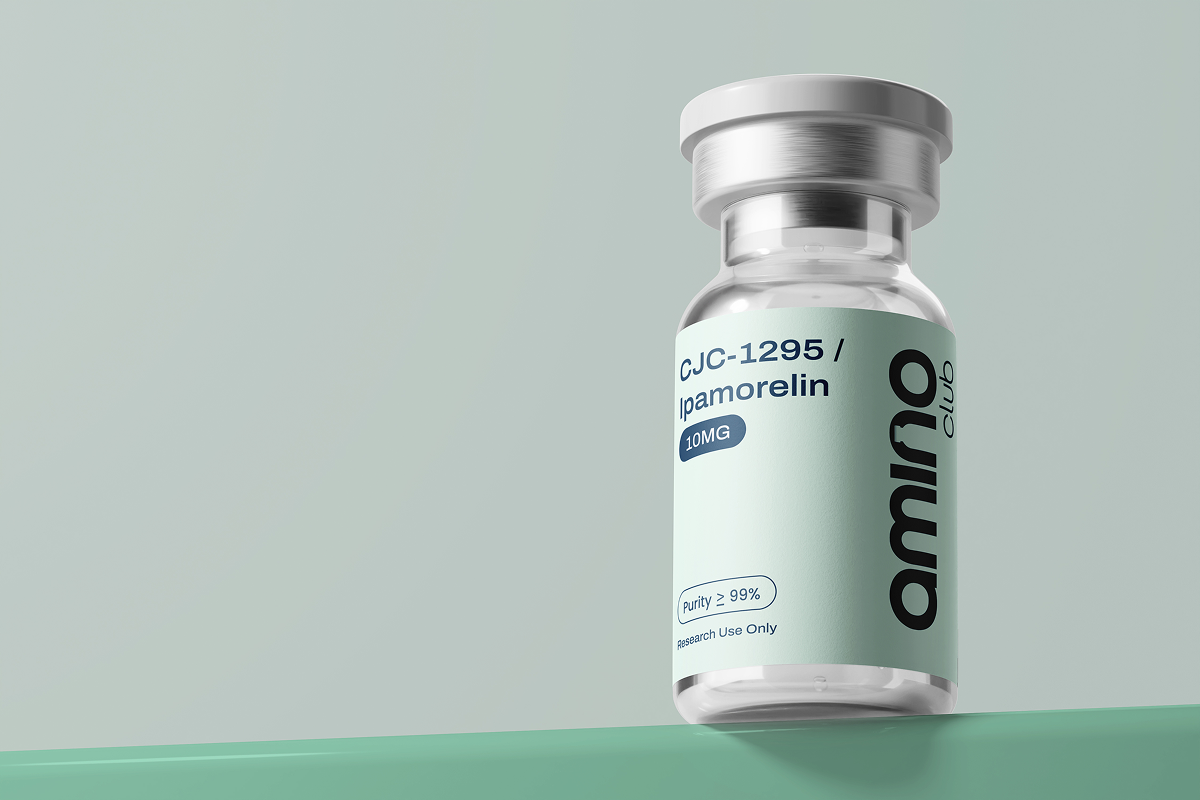
A 5-amino acid pentapeptide that selectively stimulates growth hormone release through ghrelin receptor (GHSR-1a) activation without affecting cortisol, ACTH, or prolactin levels in preclinical and clinical research. Premium Research Peptide.
Selective
GH Release
No cortisol/prolactin spike
~2hrs
Half-life
Human PK study
24%
Bone Growth
Dose-dependent increase
87.5%
Tolerability
AEs similar to placebo
80nmol/kg
ED50
GH release potency
Ipamorelin is a synthetic pentapeptide that selectively binds to the ghrelin receptor (GHSR-1a) on pituitary somatotroph cells, triggering growth hormone release. Unlike earlier GH secretagogues (GHRP-2, GHRP-6, hexarelin), Ipamorelin does not significantly elevate cortisol, ACTH, or prolactin at GH-releasing doses — making it the first truly selective growth hormone secretagogue.
Growth Hormone Secretagogue Receptor Type 1a
Stimulates GH release from pituitary
Highly selective activation
Dose-dependent response
Anterior Pituitary Somatotrophs
Direct stimulation of GH synthesis
No desensitization with repeated dosing
Preserves pulsatile GH pattern
Insulin-like Growth Factor 1
Elevated by sustained GH release
Promotes tissue growth and repair
Mediates anabolic effects
Early GH secretagogues like GHRP-6 and GHRP-2 released not only growth hormone but also cortisol, ACTH, and prolactin — causing unwanted side effects like increased appetite, water retention, and stress hormone elevation. Ipamorelin changed this paradigm.
Landmark finding: In the 1998 study that introduced Ipamorelin, researchers found it releases GH with potency (ED50 = 80 nmol/kg) comparable to GHRP-6, but without the cortisol and prolactin elevations seen with other GHRPs.
Ipamorelin has been studied for its effects on longitudinal bone growth, showing dose-dependent increases in growth rate comparable to native GH administration.
Bone study results: In a rat model, Ipamorelin increased longitudinal bone growth rate from 42 μm/day to 52 μm/day (24% increase) at the highest dose, comparable to effects seen with recombinant GH.
Summary of clinical and preclinical findings
ED50 for Growth Hormone Release
Key findings: Ipamorelin releases GH in a dose-dependent, selective manner. At 0.03 mg/kg twice daily for 7 days, it was well-tolerated in post-operative ileus patients (87.5% adverse events vs 94.8% placebo). Human pharmacokinetic studies show a half-life of ~2 hours with peak GH at 40 minutes post-injection.
Safety and tolerability in surgical patients
Important context: The Phase II post-operative ileus trial demonstrated that Ipamorelin was well-tolerated with adverse event rates similar to placebo. This was an early human safety study that confirmed the selective GH-releasing properties observed in animal studies.
Key difference: While all three peptides release GH effectively, only Ipamorelin does so without significantly elevating cortisol, ACTH, or prolactin at GH-releasing doses.
Research-supported applications of Ipamorelin
Increase in longitudinal growth rate
Andersen et al., 2001No cortisol/prolactin spike
Raun et al., 1998Allows pulsatile dosing
Johansen et al., 1999Phase II safety confirmed
Beck et al., 2014Ipamorelin demonstrated dose-dependent effects on bone growth, making it a compound of interest for growth-related research applications.
Research finding: The bone growth effects were dose-dependent and comparable to those achieved with native growth hormone, suggesting Ipamorelin effectively stimulates endogenous GH release.
Through sustained GH and IGF-1 elevation, Ipamorelin may support favorable changes in body composition and tissue recovery.
GH secretagogues like Ipamorelin, taken before bed, may enhance slow-wave sleep — the most restorative phase of the sleep cycle.
Slow-wave sleep duration
Clinical relevance: Natural GH secretion peaks during deep sleep. Evening dosing of Ipamorelin amplifies this physiologic pattern, potentially improving sleep quality and recovery.
Ipamorelin has been studied for its potential to accelerate recovery of bowel function after surgery, based on ghrelin's known prokinetic effects.
What clinical and preclinical studies report
Ipamorelin demonstrated a favorable safety profile in clinical trials. Its defining characteristic is selectivity — it does not significantly elevate cortisol, ACTH, or prolactin at GH-releasing doses, unlike earlier GHRPs.
Unlike other GHRPs, Ipamorelin does not significantly elevate:
Adverse event rates similar to placebo in Phase II trial
No serious adverse events attributed to drug
No withdrawal syndrome reported with discontinuation
WADA Prohibited Substance — banned in competitive sports
Not approved by FDA for any indication
Research compound only — not for human consumption
Technical specifications
Common questions about Ipamorelin research
Ipamorelin is the first truly selective growth hormone secretagogue. While earlier GHRPs like GHRP-6 and GHRP-2 effectively release GH, they also significantly elevate cortisol, ACTH, and prolactin — causing side effects like increased appetite, water retention, and stress hormone activation. Ipamorelin releases GH with similar potency (ED50 = 80 nmol/kg vs 115 nmol/kg for GHRP-6) but without these off-target effects, even at doses up to 200 μg/kg.
Human pharmacokinetic studies show that Ipamorelin has a half-life of approximately 2 hours, with peak GH response occurring around 40 minutes (0.67 hours) after subcutaneous injection. The serum concentration required for 50% of maximal GH response (SC50) is 214 nmol/L. This relatively short half-life allows for pulsatile dosing that mimics natural GH secretion patterns.
The most notable human trial was a Phase II study in 117 patients with post-operative ileus, where Ipamorelin (0.03 mg/kg twice daily for 7 days) was tested for its ability to accelerate GI recovery. The drug was well-tolerated with adverse events in 87.5% of drug-treated patients vs 94.8% on placebo — no significant difference. Additionally, human PK/PD studies have characterized its GH-releasing properties and pharmacokinetics.
Yes, Ipamorelin is commonly combined with GHRH analogs like CJC-1295 (No DAC) for synergistic effects. Research shows that combining GHRH and GHRP pathways produces approximately 2.7× greater GH release than either pathway alone, with 43% faster time to peak GH levels. The combination leverages two complementary mechanisms: GHRH stimulates GH synthesis and release, while Ipamorelin amplifies the response through the ghrelin receptor.
Yes, preclinical studies demonstrated dose-dependent effects on longitudinal bone growth. In a rat model, Ipamorelin increased bone growth rate from 42 μm/day to 52 μm/day at the highest dose — a 24% increase comparable to effects seen with recombinant growth hormone. This suggests Ipamorelin effectively stimulates endogenous GH release sufficient to impact bone metabolism.
Yes, Ipamorelin is a WADA Prohibited Substance, classified under S2 (Peptide Hormones, Growth Factors, Related Substances, and Mimetics). It is banned in-competition and out-of-competition in all sports. Athletes subject to drug testing should be aware that use of this compound will result in a positive test and potential sanctions.
Lyophilized (powder) Ipamorelin should be stored at 2-8°C (refrigerated) where it remains stable for 24+ months. Once reconstituted with bacteriostatic water, it should be kept refrigerated and used within 2-4 weeks. Avoid repeated freeze-thaw cycles and protect from light to maintain stability. Never use cloudy or discolored solution.
Peer-reviewed research
Raun K, Hansen BS, Johansen NL et al.
Johansen PB, Segev Y, Landau D et al.
Andersen NB, Johansen PB, Skjærbæk C et al.
Beck DE, Sweeney WB, McCarter MD et al.
Sigalos JT, Pastuszak AW
Not for human consumption. This product is sold exclusively for research and educational purposes. It is not intended to diagnose, treat, cure, or prevent any disease.
All clinical trial data and research findings presented on this page are sourced from peer-reviewed journals and official publications. They are provided for educational reference only and should not be interpreted as medical advice or product claims.
By purchasing this product, you confirm that you are a qualified researcher and will use it in accordance with all applicable laws and regulations.