4
Pathways
VEGF + Actin + Collagen + NF-κB
⚠️ FOR RESEARCH PURPOSES ONLY — This compound is not FDA approved. All data presented is from clinical trials for educational reference.
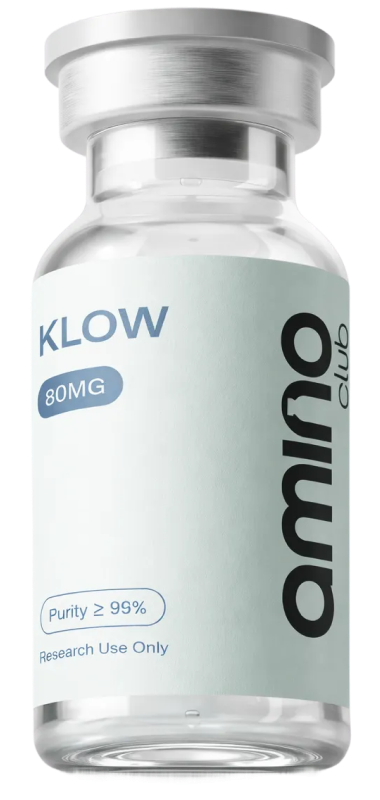
Regenerative Peptide Blend
A quad-peptide combination of BPC-157, TB-500, GHK-Cu, and KPV targeting complementary angiogenic, cellular migration, extracellular matrix remodeling, and anti-inflammatory pathways in preclinical research. Premium Research Peptide.
4
Pathways
VEGF + Actin + Collagen + NF-κB
7×
GHR Upregulation
BPC-157 by day 3
70%
Collagen Increase
GHK-Cu vs controls
NF-κB
Inhibition
KPV anti-inflammatory
600+
Combined Studies
Across all four peptides
KLOW builds upon the GLOW formula by adding KPV, a potent anti-inflammatory tripeptide derived from α-MSH. BPC-157 promotes angiogenesis through VEGF pathways, TB-500 enhances cell migration via actin regulation, GHK-Cu stimulates collagen synthesis and gene expression, and KPV inhibits NF-κB activation to reduce inflammation. Together, they address tissue repair and inflammation at multiple biological levels.
Vascular Endothelial Growth Factor (BPC-157)
Promotes blood vessel formation
Enhances tissue granulation
Modulates nitric oxide signaling
Thymosin Beta-4 Pathway (TB-500)
Increases cell migration
Supports cytoskeletal remodeling
Reduces fibrotic scarring
Copper Peptide Signaling (GHK-Cu)
Stimulates type I & III collagen
Modulates 4,000+ genes
Delivers copper to cells
Anti-Inflammatory Signaling (KPV)
Inhibits NF-κB activation
Reduces pro-inflammatory cytokines
PepT1-mediated cellular uptake
Each peptide in KLOW addresses a different phase of tissue repair while KPV provides critical inflammatory control. BPC-157 initiates vascular support and blood flow to damaged areas. TB-500 mobilizes repair cells through enhanced migration. GHK-Cu provides the collagen framework and gene activation for structural rebuilding. KPV inhibits NF-κB to create an optimal anti-inflammatory environment for healing.
Multi-phase healing: Research suggests combining regenerative peptides with anti-inflammatory agents may produce superior tissue repair outcomes by preventing chronic inflammation from impeding the healing cascade.
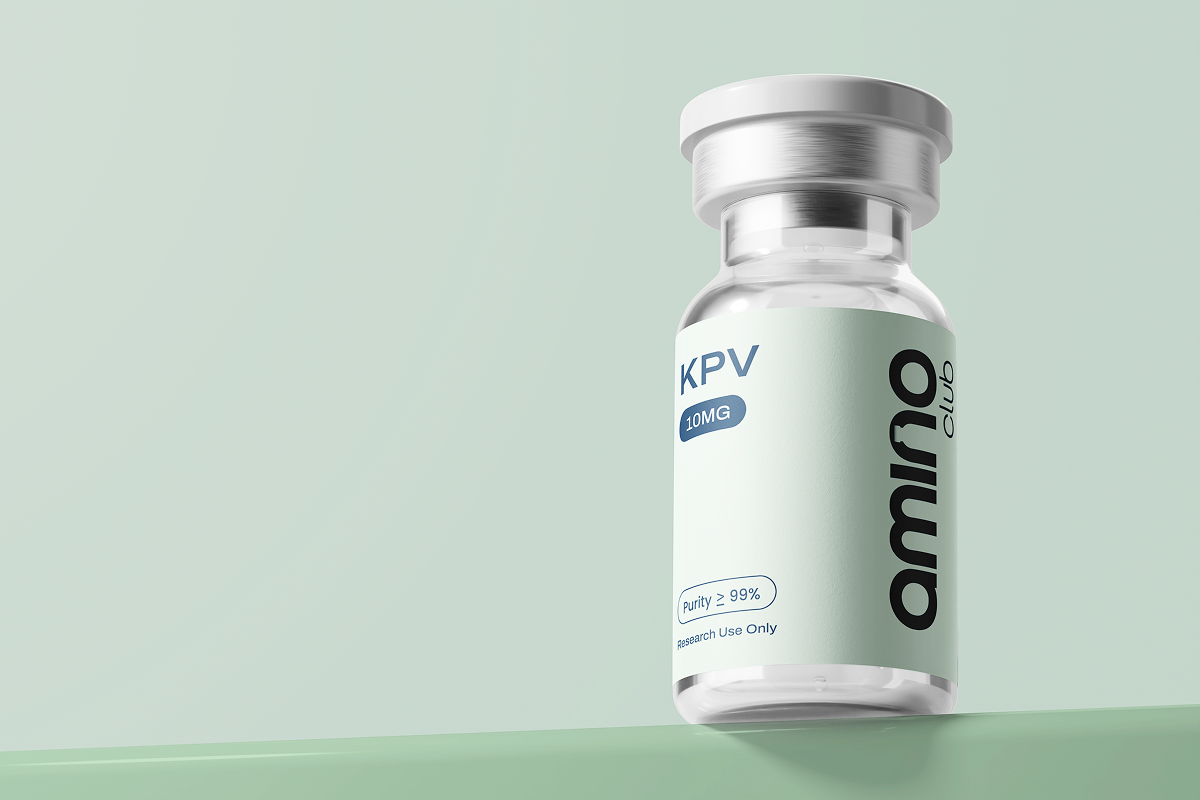
KPV (Lys-Pro-Val) is the C-terminal tripeptide of α-melanocyte-stimulating hormone (α-MSH) and retains most of α-MSH's anti-inflammatory activity. Unlike melanocortin peptides, KPV works through PepT1-mediated cellular uptake rather than melanocortin receptors, making it uniquely effective for direct intracellular NF-κB pathway modulation.
Key finding: KPV exhibits anti-inflammatory effects even stronger than full-length α-MSH in some studies, with a favorable safety profile due to its small size and natural origin.
Combined preclinical data from component peptides
Pathways Targeted Simultaneously
Combined research: Data aggregated from individual peptide studies in animal models. BPC-157: 200+ studies, TB-500: 170+ studies, GHK-Cu: 130+ studies, KPV: 100+ studies.
Key findings from each peptide's research literature
Research note: These findings are from individual peptide studies. Combination effects are based on mechanistic synergy, not direct clinical trials of the blend.
Areas studied in preclinical models
KPV shows particular promise for intestinal inflammation research, with PepT1-mediated uptake enhanced during IBD conditions
Dalmasso et al. 2008GHK-Cu promotes collagen synthesis while BPC-157, TB-500, and KPV support epithelial repair and reduce inflammation
Pickart & Margolina 2018TB-500 facilitates actin remodeling; BPC-157 promotes tendon fibroblast viability; GHK-Cu supports vascular stabilization; KPV controls inflammation
Chi et al. 2017Four peptides with distinct anti-inflammatory mechanisms: KPV inhibits NF-κB; BPC-157 modulates NO; TB-500 affects macrophages; GHK-Cu downregulates TNF-α
Luger et al. 2007KPV is the C-terminal tripeptide of α-MSH that retains powerful anti-inflammatory activity. It inhibits NF-κB activation at nanomolar concentrations, reduces pro-inflammatory cytokine secretion (IL-8, TNF-α), and shortens the duration of inflammatory signaling. Unlike full-length α-MSH, KPV works through PepT1 transport rather than melanocortin receptors.
KLOW combines BPC-157's established gastrointestinal protective effects with KPV's targeted anti-inflammatory action. In colitis models, oral KPV reduced inflammation markers, body weight loss, and tissue damage. The upregulation of PepT1 during IBD conditions actually enhances KPV therapeutic targeting.
The KLOW blend is studied in preclinical skin models for effects on dermal remodeling, wound closure, barrier restoration, and inflammatory skin conditions. GHK-Cu promotes collagen synthesis while BPC-157 and TB-500 support epithelial repair. KPV adds anti-inflammatory effects relevant to conditions like dermatitis.
In musculoskeletal research, KLOW addresses both tissue regeneration and the inflammatory component of injuries. Each peptide contributes unique repair mechanisms, while KPV prevents chronic inflammation that can impair healing outcomes.
What preclinical studies report for each component
Each peptide in the KLOW blend has been individually studied for safety. BPC-157 has shown no LD50 in toxicity studies. TB-500 and GHK-Cu are well-tolerated in animal models. KPV has a favorable safety profile due to its small size and natural origin as an α-MSH fragment. Combined effects require further investigation.
Individual peptides have favorable safety profiles in research
KPV is a naturally occurring peptide fragment (low immunogenicity)
Combination safety requires specific investigation
Human clinical data is limited for all four peptides
BPC-157: Investigational, preclinical research compound
TB-500: Investigational, WADA prohibited substance (S0 category)
GHK-Cu: Cosmetic ingredient with research applications
KPV: Naturally occurring peptide, research compound status
No FDA approval for any therapeutic indication
Technical specifications for each component
Common questions about KLOW research
KLOW is a quad-peptide blend containing BPC-157 (a 15-amino acid gastric peptide), TB-500 (a 43-amino acid thymosin beta-4 fragment), GHK-Cu (a copper tripeptide), and KPV (a 3-amino acid α-MSH fragment). Each peptide targets different but complementary mechanisms, with KPV adding potent anti-inflammatory activity through NF-κB inhibition.
GLOW contains BPC-157, TB-500, and GHK-Cu, focusing on angiogenesis, cell migration, and collagen synthesis. KLOW adds KPV, which brings powerful NF-κB inhibition and anti-inflammatory activity. This fourth component is particularly relevant for inflammatory conditions and extends the blend's research applications to include gut inflammation and inflammatory skin conditions.
KPV (Lys-Pro-Val) is the C-terminal tripeptide of α-melanocyte-stimulating hormone (α-MSH). Unlike full-length α-MSH which works through melanocortin receptors, KPV is transported into cells via PepT1 transporters. Once inside cells, it inhibits NF-κB activation and reduces pro-inflammatory cytokine production. Importantly, PepT1 expression is upregulated during inflammatory bowel disease, making KPV particularly effective in inflamed gut tissue.
KPV's anti-inflammatory effects are NOT melanocortin receptor-mediated. Instead, KPV enters cells through the PepT1 di/tripeptide transporter, which is normally expressed in the small intestine and induced in the colon during IBD. This allows KPV to directly access intracellular inflammatory pathways at nanomolar concentrations, inhibiting NF-κB activation and reducing the duration of inflammatory signaling.
KPV has been studied in models of inflammatory bowel disease (DSS- and TNBS-induced colitis), contact dermatitis, cutaneous vasculitis, asthma, rheumatoid arthritis, and ocular inflammation. Research shows that oral KPV significantly reduces inflammation, body weight loss, and tissue damage in colitis models. Studies in Gastroenterology (2007) demonstrated that KPV's anti-inflammatory effect works through PepT1-mediated uptake and subsequent NF-κB/MAPK pathway inhibition.
No. All four peptides are research compounds. BPC-157 and TB-500 are investigational peptides with no FDA approval and are banned by WADA. GHK-Cu is used in cosmetic formulations but is not approved as a therapeutic. KPV is a naturally occurring peptide fragment used for research purposes. KLOW is intended for laboratory and preclinical research applications only.
Yes, research indicates KPV is effective via oral administration. Because KPV is transported by PepT1 (a di/tripeptide transporter expressed in the intestine), it can be absorbed intact from the gut. Studies in Gastroenterology showed that oral KPV reduced inflammation in colitis models. The other three components (BPC-157, TB-500, GHK-Cu) are typically administered via injection in research protocols.
Lyophilized (powder) form should be stored at -20°C for long-term stability. Once reconstituted, store at 2-8°C (refrigerated) and use within 7 days. Protect from light and avoid repeated freeze-thaw cycles. Each component has slightly different stability profiles, so follow manufacturer guidelines for specific formulations.
Peer-reviewed research
Dalmasso G, Charrier-Hisamuddin L, Nguyen HT, et al.
Luger TA, Brzoska T, Scholzen TE, et al.
Xiao B, Xu Z, Viennois E, et al.
Pickart L, Margolina A
Chi NC et al.
Seiwerth S et al.
Not for human consumption. This product is sold exclusively for research and educational purposes. It is not intended to diagnose, treat, cure, or prevent any disease.
All clinical trial data and research findings presented on this page are sourced from peer-reviewed journals and official publications. They are provided for educational reference only and should not be interpreted as medical advice or product claims.
By purchasing this product, you confirm that you are a qualified researcher and will use it in accordance with all applicable laws and regulations.
Quad-peptide regenerative & anti-inflammatory stack