50%
MPO Reduction
DSS colitis model
⚠️ FOR RESEARCH PURPOSES ONLY — This compound is not FDA approved. All data presented is from clinical trials for educational reference.
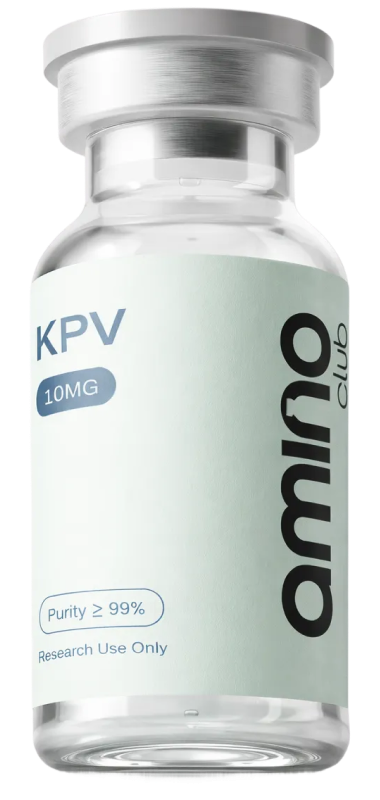
Anti-Inflammatory Peptide
"A 3-amino acid tripeptide (Lys-Pro-Val) derived from the C-terminus of alpha-melanocyte-stimulating hormone that inhibits NF-κB activation via PepT1-mediated cellular uptake in preclinical inflammatory research models. Premium Research Peptide.
Third Party Tested by Freedom Diagnostics
50%
MPO Reduction
DSS colitis model
35%
IL-8 Decrease
Inflammatory cytokine
10nM
Effective Dose
In vitro concentration
PepT1
Transport
Not MCR-mediated
100+
Publications
α-MSH peptide research
KPV is the C-terminal tripeptide of alpha-melanocyte-stimulating hormone (α-MSH) that retains potent anti-inflammatory activity. Unlike full-length α-MSH which works through melanocortin receptors, KPV enters cells via the PepT1 di/tripeptide transporter. Once inside, it inhibits NF-κB and MAPK inflammatory signaling pathways at nanomolar concentrations, reducing pro-inflammatory cytokine production.
Peptide Transporter 1 (SLC15A1)
High-affinity cellular uptake (Km ~160 μM)
Enhanced expression during IBD
Enables oral bioavailability
Nuclear Factor Kappa-B Inhibition
Shortens NF-κB activation duration
Interacts with IκB-α and p65RelA
Nuclear import inhibition
Mitogen-Activated Protein Kinase
Reduces ERK phosphorylation
Decreases inflammatory signaling
Synergizes with NF-κB inhibition
A crucial finding is that KPV's anti-inflammatory effects are NOT mediated by melanocortin receptors (MC1R-MC5R). KPV does not bind to MC-1R and fails to increase cAMP levels. Instead, it is transported directly into cells by PepT1, where it accumulates in the nucleus to inhibit NF-κB activation. This explains why KPV remains effective even in MC1R knockout models.
Clinical significance: PepT1 expression is upregulated during inflammatory bowel disease, meaning inflamed tissue actually takes up MORE KPV — a self-targeting mechanism that enhances therapeutic potential.
Unlike most peptides that require injection, KPV can be administered orally. The PepT1 transporter is naturally expressed in the small intestine and is induced in the colon during IBD. Research shows oral KPV (100 μM in drinking water) significantly reduced inflammation in both DSS- and TNBS-induced colitis mouse models.
Practical advantage: Oral delivery combined with enhanced uptake at inflamed sites makes KPV uniquely suited for gastrointestinal inflammatory conditions.
Preclinical efficacy in inflammatory models
Reduction in Colonic MPO Activity
Study design: C57BL/6 mice (n=10 per group), 8 weeks old, treated with 100 μM KPV in drinking water. DSS model: 8 days; TNBS model: assessed at 48 hours.
Results from controlled animal studies and cell culture experiments
Research note: These are preclinical findings from animal models. Human clinical trials are needed to establish therapeutic efficacy and safety in humans.
Areas studied in preclinical models
Primary focus: ulcerative colitis and Crohn's disease models with PepT1-mediated targeting to inflamed intestinal tissue
Dalmasso et al. 2008Studied in contact dermatitis, cutaneous vasculitis, and wound healing models; topical application shows efficacy
Luger et al. 2007KPV exhibits antimicrobial activity against Staphylococcus aureus and Candida albicans pathogens
Br J Pharmacol 2000α-MSH peptides showed efficacy comparable to prednisolone without causing weight loss in adjuvant-induced arthritis
Luger et al. 2007KPV's primary research focus is inflammatory bowel disease. The upregulation of PepT1 during IBD creates a self-targeting mechanism where inflamed tissue preferentially accumulates KPV. Oral administration is effective, making it uniquely practical for GI applications.
At the cellular level, KPV inhibits NF-κB at nanomolar concentrations. It shortens the duration of NF-κB activation by interacting with IκB-α, p65RelA, and Importin-α3 — critical mediators of the inflammatory cascade. The peptide accumulates in the nucleus where it exerts these effects.
KPV and α-MSH peptides have been studied in various skin inflammation models including contact dermatitis, cutaneous vasculitis, and wound healing. Topical application of α-MSH showed effectiveness in nickel-induced contact eczema in preliminary human studies.
Beyond anti-inflammatory effects, KPV exhibits direct antimicrobial activity. Research demonstrates efficacy against common pathogens including Staphylococcus aureus and Candida albicans, suggesting dual therapeutic potential in infected inflammatory conditions.
Pathogen species inhibited
Dual action: Anti-inflammatory + antimicrobial properties may be particularly valuable in conditions where infection drives inflammation.
What preclinical studies report
KPV has shown a favorable safety profile in preclinical research. As a naturally occurring fragment of α-MSH (a human peptide hormone), it is expected to have low immunogenicity. Studies report no adverse effects on basal inflammatory parameters in control animals.
Natural human peptide fragment (low immunogenicity expected)
No adverse effects on control animals
Nanoparticle formulations also showed good safety
Human safety data is limited — research compound status
KPV is an investigational research compound
No FDA approval for any therapeutic indication
Not scheduled or controlled substance
Available for research purposes only
Technical specifications
Common questions about KPV research
KPV is a tripeptide (Lys-Pro-Val) that corresponds to the C-terminal amino acids 11-13 of alpha-melanocyte-stimulating hormone (α-MSH). Despite being only 3 amino acids compared to α-MSH's 13, KPV retains potent anti-inflammatory activity. It was discovered that this small fragment is responsible for much of α-MSH's anti-inflammatory effects, working through a mechanism independent of melanocortin receptors.
The key difference is mechanism: α-MSH works primarily through melanocortin receptors (MC1R-MC5R), while KPV does NOT bind to these receptors. Instead, KPV is transported into cells via PepT1 (peptide transporter 1), where it directly inhibits NF-κB signaling in the nucleus. This means KPV can work even in tissues lacking melanocortin receptors, and its uptake is actually enhanced in inflamed intestinal tissue where PepT1 is upregulated.
Yes, research demonstrates that KPV is effective via oral administration. The PepT1 transporter is naturally expressed in the small intestine, allowing KPV to be absorbed intact. In mouse colitis models, oral KPV (100 μM in drinking water) significantly reduced inflammation markers. This is unusual for peptides, which typically require injection due to degradation in the GI tract.
The primary research focus is inflammatory bowel disease (IBD), including ulcerative colitis and Crohn's disease models. KPV has also been studied in: contact dermatitis, cutaneous vasculitis, allergic airway inflammation, adjuvant-induced arthritis, ocular inflammation, and wound healing. Additionally, KPV shows antimicrobial activity against Staphylococcus aureus and Candida albicans.
PepT1 transport is clinically significant because this transporter is upregulated during inflammatory bowel disease. This means inflamed intestinal tissue preferentially accumulates KPV — essentially a self-targeting mechanism. The more inflamed the tissue, the more KPV it takes up. This could explain the enhanced efficacy seen in colitis models and suggests a built-in tissue selectivity.
No. KPV is a preclinical research compound that has not been approved by the FDA or any regulatory authority for therapeutic use in humans. While preclinical studies show promising anti-inflammatory effects and a favorable safety profile, human clinical trials are needed to establish safety and efficacy. It is currently available for research purposes only.
In cell culture studies, 10 nanomolar (nM) concentrations of KPV effectively inhibit NF-κB activation and reduce inflammatory cytokine production. In mouse colitis models, 100 micromolar (μM) KPV delivered in drinking water showed significant anti-inflammatory effects. Human therapeutic dosing has not been established as clinical trials have not been conducted.
Lyophilized (powder) KPV should be stored at -20°C for long-term stability. Once reconstituted, store at 2-8°C (refrigerated) and use within 7 days. Protect from light and avoid repeated freeze-thaw cycles. The small peptide size contributes to reasonable stability, but standard peptide handling precautions should be followed.
Peer-reviewed research
Dalmasso G, Charrier-Hisamuddin L, Nguyen HT, et al.
Luger TA, Brzoska T, Scholzen TE, et al.
Xiao B, Xu Z, Viennois E, et al.
Kannengiesser K, Maaser C, Heidemann J, et al.
Brzoska T, Luger TA, Maaser C, et al.
Not for human consumption. This product is sold exclusively for research and educational purposes. It is not intended to diagnose, treat, cure, or prevent any disease.
All clinical trial data and research findings presented on this page are sourced from peer-reviewed journals and official publications. They are provided for educational reference only and should not be interpreted as medical advice or product claims.
By purchasing this product, you confirm that you are a qualified researcher and will use it in accordance with all applicable laws and regulations.
Anti-inflammatory & regenerative peptides