70%
More Sun Time
69.4 vs 40.8 hrs pain-free
⚠️ FOR RESEARCH PURPOSES ONLY — This compound is not FDA approved. All data presented is from clinical trials for educational reference.

Tanning Peptide
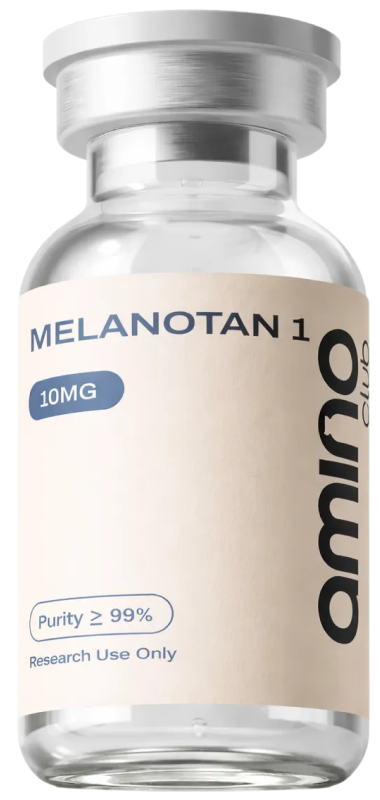
A 13-amino acid linear peptide analog of alpha-melanocyte-stimulating hormone that selectively activates MC1R to stimulate eumelanin synthesis and photoprotective pathways in clinical research. Premium Research Peptide.
70%
More Sun Time
69.4 vs 40.8 hrs pain-free
FDAapproved
Scenesse (2019)
For EPP in adults
8+years
Safety Data
Long-term observational
MC1Rselective
Targeted Action
Minimal off-target effects
13amino acids
Linear Peptide
α-MSH analog
Melanotan I (afamelanotide) is a synthetic linear analog of alpha-melanocyte-stimulating hormone (α-MSH) that differs from the natural hormone by just two amino acid substitutions. These changes give it greater binding affinity for MC1R and a longer biological half-life, making it more effective at stimulating melanin production than the body's own α-MSH.
Melanocortin-1 Receptor
Stimulates eumelanin (dark pigment) synthesis
Activates antioxidant pathways in skin cells
Enhances DNA repair after UV exposure
Unlike Melanotan II (which activates MC1R-MC5R non-selectively), Melanotan I primarily targets MC1R — the receptor responsible for pigmentation. This selectivity means it produces tanning effects without the sexual function, appetite suppression, or other central nervous system effects associated with MC3R/MC4R activation.
Key difference from MT-II: Melanotan I's linear structure and MC1R selectivity produce pigmentation without the pro-erectile or appetite-suppressing side effects of the cyclic Melanotan II.
MC1R signaling does more than just darken skin. It activates three complementary defense mechanisms: increased eumelanin production (UV absorption), enhanced antioxidant activity (neutralizing free radicals), and improved DNA repair processes (fixing UV-induced damage).
FDA registration trials in erythropoietic protoporphyria
More Pain-Free Sun Exposure (US Study)
Clinical significance: EPP patients live with severe light-induced pain that doesn't respond to conventional analgesics. Afamelanotide allowed them to significantly increase their time outdoors without debilitating phototoxic reactions.
Results from two pivotal randomized controlled trials published in the New England Journal of Medicine
FDA approval: Based on these Phase 3 results, afamelanotide (Scenesse) received FDA approval in October 2019 for adults with EPP, making it the first FDA-approved melanocortin therapy for a skin condition.
Note: Phototoxic reaction counts from the EU study over 9 months (P=0.04)
Additional research applications of afamelanotide
Phase 3 EPP trial
SourceEU Phase 3 trial
SourceNo new safety signals
SourceOctober 2019
SourceMC1R activation increases eumelanin synthesis, providing enhanced protection against UV-induced DNA damage beyond simple pigmentation darkening.
Phase 2/3 trials investigate afamelanotide combined with NB-UVB phototherapy for accelerating repigmentation in generalized vitiligo.
Trial status
Combination approach: Afamelanotide may enhance the repigmentation effects of NB-UVB phototherapy by stimulating melanocyte activity.
Published studies have explored afamelanotide in several photosensitive conditions beyond EPP.
From FDA registration trials and long-term observational data
Afamelanotide has a well-characterized safety profile from three vehicle-controlled RCTs (n=125 active treatment) and long-term observational studies up to 8 years. Most adverse events are mild and self-limiting.
Darkening of skin, lips, and existing moles/freckles is the intended pharmacological effect. This is not a side effect per se but a consequence of melanin stimulation.
No immunogenic potential detected
No additional safety signals in 8-year observational study of 115 patients
Adverse events mostly mild and self-limiting
Skin hyperpigmentation requiring no intervention (cosmetic)
New melanocytic nevi formation (monitor dermatologically)
Implant expulsion (rare, requires re-administration)
No serious adverse events attributed to study drug in Phase 3 trials
Technical specifications
Synthetic linear tridecapeptide analog of α-MSH
Common questions about Melanotan I research
Melanotan I (afamelanotide) is a linear 13-amino acid peptide that selectively targets MC1R for pigmentation with minimal effects on sexual function or appetite. Melanotan II is a cyclic 7-amino acid peptide that non-selectively activates MC1R through MC5R, producing both tanning and pro-erectile effects. Melanotan I has been developed into an FDA-approved drug (Scenesse) for erythropoietic protoporphyria, while Melanotan II remains a research compound. MT-I's selectivity results in a cleaner side effect profile focused on pigmentation.
Yes. Afamelanotide (brand name Scenesse) was approved by the FDA in October 2019 for increasing pain-free light exposure in adult patients with erythropoietic protoporphyria (EPP). It was previously approved by the European Medicines Agency in 2014 and the Australian TGA. It is the first FDA-approved melanocortin receptor therapy for a dermatological condition. The approved formulation is a 16mg controlled-release subcutaneous implant.
Melanotan I activates MC1R on melanocytes, triggering the cAMP-PKA signaling cascade that stimulates eumelanin (dark, photoprotective pigment) synthesis. Unlike UV-induced tanning, which requires DNA damage to initiate the signaling, afamelanotide directly activates the receptor. Clinical trials showed it works even in individuals with MC1R genetic variants who typically cannot tan from UV exposure. Pigmentation develops over 5-7 days and persists weeks to months after discontinuation.
Beyond its FDA-approved indication for EPP, afamelanotide is being investigated in Phase 2/3 clinical trials for vitiligo (combined with NB-UVB phototherapy to accelerate repigmentation). Published studies also demonstrate efficacy in polymorphic light eruption, solar urticaria, and Hailey-Hailey disease. Smaller studies have explored its potential in acne vulgaris. Its dual photoprotective and anti-inflammatory mechanisms make it a versatile candidate for multiple photosensitive conditions.
Based on FDA registration trials (n=125 active treatment), the most common side effects were headache (38%), nausea (26%), implant site reactions (21%), and nasopharyngitis (18%). Skin darkening occurs in nearly all patients but is the intended pharmacological effect. No serious adverse events were attributed to afamelanotide in Phase 3 trials, and an 8-year observational study showed no additional safety signals. Compared to Melanotan II, MT-I causes minimal sexual side effects or appetite suppression due to its MC1R selectivity.
Peer-reviewed research
Langendonk JG, Balwani M, Anderson KE, et al.
Minder EI, Barman-Aksoezen J, Schneider-Yin X.
Wu R, Cotliar J.
Not for human consumption. This product is sold exclusively for research and educational purposes. It is not intended to diagnose, treat, cure, or prevent any disease.
All clinical trial data and research findings presented on this page are sourced from peer-reviewed journals and official publications. They are provided for educational reference only and should not be interpreted as medical advice or product claims.
By purchasing this product, you confirm that you are a qualified researcher and will use it in accordance with all applicable laws and regulations.
Melanocortin & photoprotection peptides