18.2%
Visceral Fat Reduction
Abdominal fat loss at 26 weeks
⚠️ FOR RESEARCH PURPOSES ONLY — This compound is not FDA approved. All data presented is from clinical trials for educational reference.
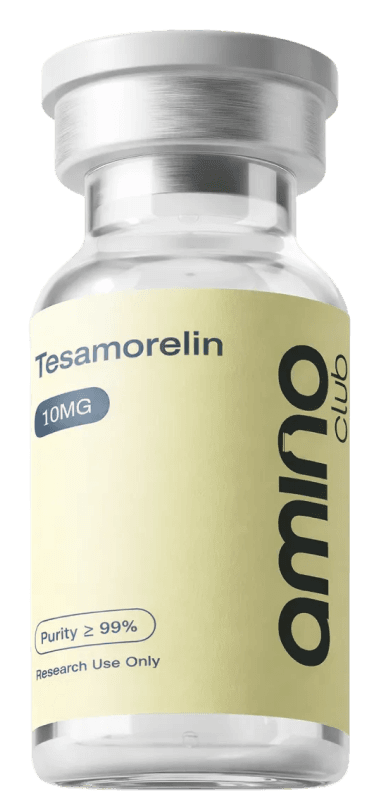
Growth Hormone Releasing Peptide
A 44-amino acid GHRH analog that stimulates pituitary gh secretion, studied for visceral adipose tissue reduction in clinical research. Premium Research Peptide.
 4 interest-free payments of $17.50



18.2%
Visceral Fat Reduction
Abdominal fat loss at 26 weeks
117%
IGF-1 Increase
Growth factor elevation
37%
Liver Fat Reduction
NAFLD improvement at 12 months
35%
NAFLD Resolution
Complete fatty liver reversal
P=0.005
Executive Function
Significant cognitive improvement
Binds to GHRH receptors on pituitary somatotrophs, stimulating pulsatile GH release that maintains physiological feedback mechanisms and circadian rhythms.
Stimulates hepatic IGF-1 production, promoting selective lipolysis in visceral adipose tissue while preserving subcutaneous fat and muscle mass.
Reduces ectopic fat deposition in liver and muscle, improving insulin sensitivity and metabolic flexibility without disrupting glucose homeostasis.
Key advantage: Preserves natural GH pulsatility unlike exogenous growth hormone
Phase 3 EGRIFTA trials in HIV lipodystrophy
Average Visceral Fat Reduction at 26 Weeks
Trial details: 816 HIV-infected patients with lipodystrophy across two Phase 3 trials. Primary endpoint was percent change in trunk fat (VAT) measured by CT scan at 26 weeks.
Percentage of patients achieving clinical endpoints
Additional metabolic and systemic benefits
Mean elevation from baseline
SourceIn VAT responders
SourceNo loss of lean tissue
SourcePatient-reported outcomes
SourceImprovements in metabolic markers without adverse glucose effects
Improvements in muscle density and lean mass area
Comprehensive improvements in liver function and structure
Unique benefit: Only FDA-approved agent for HIV-associated NAFLD
FDA-approved protocols and administration
Tesamorelin requires daily subcutaneous administration. Effects are maintained only with continued treatment and reverse upon discontinuation.
For HIV-associated lipodystrophy
2mg daily
Subcutaneous injection
1.28mg EGRIFTA WR
Weekly reconstitution option
Inject in abdomen, rotate sites
Same time each day recommended
Effects reverse if discontinued
Continue indefinitely for maintained results
Based on MCI/aging study
1mg daily
30 min before bedtime
Assess response
Lower dose effective
Lower dose than standard lipodystrophy protocol
Bedtime administration studied
Short half-life requires daily dosing
Rapid absorption after SubQ injection
Data from Phase 3 trials with 816 patients
Generally well-tolerated with predictable side effects related to GH stimulation. Most adverse events are mild to moderate.
Anti-tesamorelin antibodies detected but no impact on efficacy
Most discontinuations in first 26 weeks
Well-tolerated long-term
Glucose intolerance (5% HbA1c ≥6.5%)
Theoretical malignancy risk with IGF-1 elevation
Diabetic retinopathy progression
Fluid retention complications
Common questions about Tesamorelin
IGF-1 levels increase within 2-4 weeks. Visible reduction in abdominal fat typically begins around 8-12 weeks, with maximal effects at 26 weeks. Clinical trials show 15-18% visceral fat reduction at 6 months.
Effects are not sustained after discontinuation. Clinical studies show visceral fat returns to near baseline levels within 26 weeks of stopping treatment. This makes continuous therapy necessary to maintain benefits.
No. Tesamorelin stimulates your body's own growth hormone production while preserving natural pulsatility and feedback mechanisms. This is physiologically superior to exogenous HGH, which disrupts natural patterns and carries higher risk of side effects.
Tesamorelin is FDA-approved specifically for HIV-associated lipodystrophy, not general weight loss. It selectively reduces visceral (abdominal) fat while preserving subcutaneous fat and muscle mass. The FDA label explicitly states it is not for weight loss management.
Regular monitoring includes: IGF-1 levels (should remain in physiological range), glucose tolerance/HbA1c (especially in diabetics), injection site reactions, and periodic assessment of treatment response via waist circumference or imaging.
Research shows promising cognitive benefits. A controlled trial demonstrated significant improvements in executive function (P=0.005) and response inhibition (P=0.009) in both healthy older adults and those with mild cognitive impairment, using just 1mg daily.
Peer-reviewed research
Falutz J, et al.
Stanley TL, et al.
Not for human consumption. This product is sold exclusively for research and educational purposes. It is not intended to diagnose, treat, cure, or prevent any disease.
All clinical trial data and research findings presented on this page are sourced from peer-reviewed journals and official publications. They are provided for educational reference only and should not be interpreted as medical advice or product claims.
By purchasing this product, you confirm that you are a qualified researcher and will use it in accordance with all applicable laws and regulations.
Baker LD, et al.