2
Pathways
VEGFR2 + Actin/ILK synergy
⚠️ FOR RESEARCH PURPOSES ONLY — This compound is not FDA approved. All data presented is from clinical trials for educational reference.
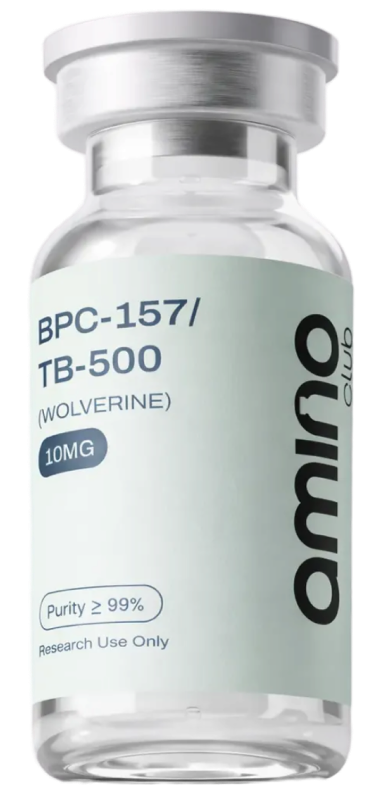
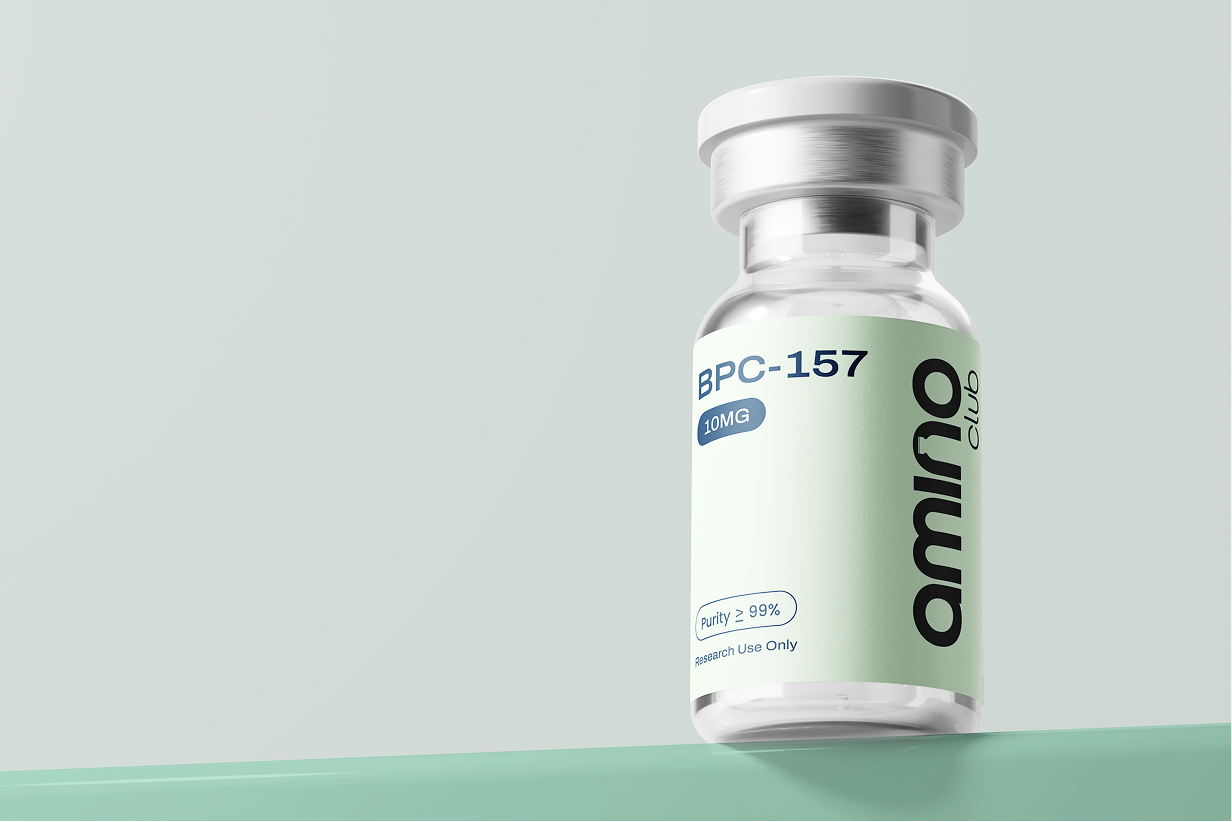
Regenerative Peptide Blend
A synergistic peptide combination designed to support tissue repair and regenerative processes through complementary cellular mechanisms in animal research models. Premium Research Peptide.
From
$119.992
Pathways
VEGFR2 + Actin/ILK synergy
7×
GHR Upregulation
BPC-157 day 3 (tendon)
61%
Faster Healing
TB-500 re-epithelialization
No LD50
Achieved
Both peptides in toxicity studies
370+
Combined Studies
200+ BPC + 170+ TB-500
The Wolverine Stack combines two peptides with distinct but complementary mechanisms. BPC-157 promotes angiogenesis (blood vessel formation) through VEGFR2 signaling, while TB-500 enhances cell migration through G-actin regulation. Together, they create optimal conditions for tissue repair by addressing both vascular supply and cellular mobility.
Vascular Endothelial Growth Factor Receptor 2
Promotes new blood vessel formation
Increases blood flow to injured areas
Activates endothelial cell proliferation
Monomeric Globular Actin Binding
Regulates cytoskeletal remodeling
Facilitates cell motility and migration
Enables wound closure mechanisms
Integrin-Linked Kinase Complex
Promotes cell survival signaling
Activates Akt pathway
Supports cardiac and muscle cell migration
Inflammation Modulation Pathways
Reduces pro-inflammatory cytokines
Modulates NF-κB signaling
Promotes resolution of inflammation
BPC-157 and TB-500 work through different but convergent mechanisms. BPC-157 promotes blood vessel formation through VEGFR2-Akt-eNOS signaling, while TB-500 promotes cell migration by regulating actin dynamics. Both reduce inflammation — creating optimal healing conditions from multiple angles.
Key synergy insight: While BPC-157 brings blood supply to injury sites, TB-500 enables cells to migrate to those sites. Together, they address both vascular and cellular requirements for tissue repair.
BPC-157 activates the VEGFR2 pathway, triggering the Akt-eNOS cascade. This increases nitric oxide production and promotes new blood vessel formation (angiogenesis) at injury sites, ensuring adequate nutrient and oxygen delivery.
J Mol Med (2017): BPC-157 upregulates VEGFR2 expression, promotes receptor internalization, and activates VEGFR2-Akt-eNOS signaling — accelerating blood flow recovery in ischemic tissue models.
Combined preclinical and clinical findings
Distinct but Complementary Regenerative Mechanisms
Combined potential: Both peptides demonstrate convergent effects on angiogenesis promotion and inflammatory modulation while maintaining distinct molecular targets, suggesting synergistic therapeutic applications in regenerative medicine (GlobalRPH 2025).
Selected findings from individual peptide studies:
Important: No formal combination studies have been published. Synergy is inferred from complementary mechanisms and independent efficacy data. Both peptides are investigational compounds.
Complementary mechanisms: BPC-157's angiogenic effects may enhance TB-500's cell migration by improving blood supply to injury sites.
Improvement in healing markers from individual peptide studies:
Why researchers study these peptides together
Complementary tissue repair mechanisms
J Applied Physiology61% faster + increased blood supply
J Invest DermatolFAK/paxillin + actin regulation pathways
Expert Opin Biol TherDual inflammation control pathways
PMC Function ReviewThe combination addresses multiple aspects of musculoskeletal healing: BPC-157 promotes blood vessel formation and growth factor signaling, while TB-500 enhances cell motility and cytoskeletal remodeling.
Synergy potential: BPC-157's angiogenic effects may enhance delivery of nutrients and oxygen, while TB-500's cell migration effects bring repair cells to the injury site — a potentially complementary approach.
TB-500 has shown cardioprotective effects through ILK activation, while BPC-157 promotes vascular repair. Together, they may address multiple aspects of cardiovascular healing.
BPC-157 was originally isolated from gastric tissue and has extensive GI research. Its cytoprotective effects may complement TB-500's tissue repair properties.
BPC-157 gastric stability
BPC-157 origin: Originally isolated from gastric juice, BPC-157 demonstrates remarkable stability in the digestive system and has been extensively studied for GI protection.
Both peptides have demonstrated neuroprotective properties in preclinical models, with TB-500 promoting oligodendrogenesis and BPC-157 modulating the brain-gut axis.
From clinical trials and preclinical studies
No formal combination dosing protocols have been established. Information below is derived from individual peptide studies. Researchers often combine these peptides based on independent dosing data.
Standard research doses from animal studies range from 10 ng/kg to 10 μg/kg. Human Phase 1 trial tested oral tablets (1-6mg).
Standard research dose
1-2× daily
Most common in rat studies
Phase 1 oral tablet
Single or 3× daily × 14d
Human trial (NCT02637284)
Effective across a 1000-fold dose range
No dose-limiting toxicity identified
Oral bioavailability confirmed (gastric stable 24+ hrs)
Phase 1 trial tested IV doses from 42-1260mg daily for 14 days in healthy volunteers. All doses were well tolerated.
Low dose cohort
Single, then daily × 14d
t½ = 0.95 hours
High dose cohort
Single, then daily × 14d
t½ = 1.9 hours
Optimal neurological dose
Calculated from preclinical
Quartic regression model
All doses well tolerated with no dose-limiting toxicities
Pharmacokinetic profile showed dose-proportional response
Half-life increased with increasing dose (0.95-1.9 hrs)
Short half-lives are typical for peptide drugs
BPC-157's gastric stability supports oral administration
TB-500 shows dose-proportional pharmacokinetics
Combined data from individual peptide studies
Both peptides have demonstrated favorable safety profiles in their respective studies. BPC-157 has extensive preclinical safety data, while TB-500 has completed Phase 1 human trials with no serious adverse events.
Both peptides promote angiogenesis (blood vessel growth), which raises theoretical concerns about potential effects on tumor growth. This has not been definitively studied.
BPC-157: No lethal dose reached in preclinical toxicology
TB-500: No serious adverse events at doses up to 1260mg IV
Both peptides show favorable safety profiles in available data
Both classified as unapproved drugs by FDA
Prescription-only in Australia and New Zealand
Not available through legitimate prescriptions in most countries
TB-500 Phase 2 trials completed for dry eye disease
Technical specifications
Common questions about the Wolverine Stack
The name references the Marvel character Wolverine, known for his rapid healing abilities. BPC-157 and TB-500 are two regenerative peptides that work through different but complementary pathways — BPC-157 promotes blood vessel formation (angiogenesis) while TB-500 enhances cell migration. Together, they address multiple aspects of tissue repair, leading to the nickname 'Wolverine blend' or 'Wolverine stack' in research and athletic recovery circles.
No formal clinical trials have been published specifically on the BPC-157 + TB-500 combination. The synergistic potential is inferred from their complementary mechanisms of action and independent efficacy data. BPC-157 has over 200 preclinical studies and one Phase 1 trial, while TB-500 has completed Phase 1 and Phase 2 trials for different indications. Both peptides demonstrate convergent effects on angiogenesis and inflammation while working through distinct molecular targets.
BPC-157 primarily works through the VEGFR2-Akt-eNOS pathway to promote angiogenesis (blood vessel formation), while TB-500 primarily works through G-actin sequestration to promote cell migration and cytoskeletal remodeling. For tissue repair, you need both: blood vessels to supply nutrients and oxygen, and cells that can migrate to the injury site. Both peptides also modulate inflammatory pathways, reducing the damaging effects of chronic inflammation on healing tissues.
Both peptides individually have demonstrated favorable safety profiles. BPC-157 has no established lethal dose (LD50) in preclinical studies and shows no organ toxicity. TB-500 Phase 1 trials showed no serious adverse events at IV doses up to 1260mg daily for 14 days. However, no combination safety studies exist, and both peptides promote angiogenesis, which theoretically could affect tumor growth in individuals with undiagnosed malignancies. Neither peptide is FDA approved.
Neither BPC-157 nor TB-500 is FDA approved for human therapeutic use. They are classified as unapproved drugs by the FDA. Both are banned by WADA (World Anti-Doping Agency) under category S0 (non-approved substances), and BPC-157 is on the DoD Prohibited Dietary Supplement list. They may be available for research purposes or through compounding pharmacies in some jurisdictions, but this does not imply safety or efficacy for human use.
Both peptides have been administered via multiple routes in research settings: subcutaneous injection, intramuscular injection, intravenous infusion, and orally. BPC-157 is notably stable in gastric juice for over 24 hours, supporting oral administration. TB-500 Phase 1 trials used IV administration. There are no established combination protocols, and researchers typically derive dosing from individual peptide studies.
The lack of regulatory oversight for these compounds means purity, potency, sterility, and batch-to-batch consistency may vary significantly between suppliers. Certificates of analysis (COAs) should be evaluated, and products from reputable sources with third-party testing are recommended. Contamination with other substances or inaccurate dosing are real concerns with non-pharmaceutical grade products.
Peer-reviewed research
McAuley D
Vasireddi N, Hahamyan H, Salata MJ, Karns M, Calcei JG, Voos JE, Apostolakos JM
Goldstein AL, Hannappel E, Sosne G, Kleinman HK
Ruff D, Crockford D, Girardi G, Zhang Y
Malinda KM, Sidhu GS, Mani H, Banaudha K, Maheshwari RK, Goldstein AL, Kleinman HK
Chang CH, Tsai WC, Lin MS, Hsu YH, Pang JH
Hsieh MJ, Lee CH, Chueh HY, et al.
Xu C, Sun L, Ren F, et al.
Bock-Marquette I, Saxena A, White MD, Dimaio JM, Srivastava D
Staresinic M, Sebecic B, et al.
Xing Y, et al.
Not for human consumption. This product is sold exclusively for research and educational purposes. It is not intended to diagnose, treat, cure, or prevent any disease.
All clinical trial data and research findings presented on this page are sourced from peer-reviewed journals and official publications. They are provided for educational reference only and should not be interpreted as medical advice or product claims.
By purchasing this product, you confirm that you are a qualified researcher and will use it in accordance with all applicable laws and regulations.