2×
Running Time
Aged mice performance
⚠️ FOR RESEARCH PURPOSES ONLY — This compound is not FDA approved. All data presented is from clinical trials for educational reference.
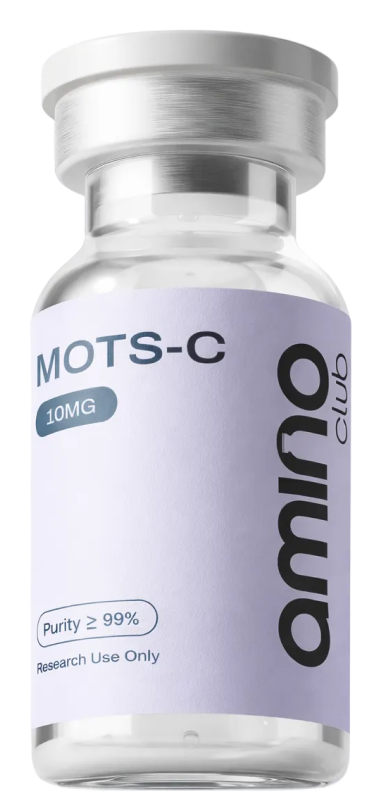
Metabolic & Longevity Peptide
A mitochondrial-derived peptide that modulates metabolic processes, with significant implications for exercise metabolism observed in rodent studies. Premium Research Peptide.
2×
Running Time
Aged mice performance
6.4%
Lifespan Increase
Median lifespan in mice
11.9×
Muscle Expression
Post-exercise increase
AMPK
Activation
Master metabolic switch
16aa
Peptide Length
Mitochondrial-derived
MOTS-c is a 16-amino acid peptide encoded in the mitochondrial genome. When released, it travels to skeletal muscle where it activates AMPK — the same master metabolic switch triggered by exercise. This leads to improved glucose uptake, enhanced fat burning, and better insulin sensitivity without actual physical activity.
AMP-Activated Protein Kinase
Increases glucose uptake
Enhances fatty acid oxidation
Improves insulin sensitivity
Nuclear Gene Regulation
Regulates stress response genes
Promotes metabolic adaptation
Enhances cellular resilience
Sirtuin 1 Signaling
Increases NAD+ levels
Activates longevity genes
Enhances mitochondrial function
MOTS-c is naturally released from muscles during exercise. When given exogenously, it replicates the metabolic benefits of physical activity by activating the same AMPK-dependent pathways.
Exercise response: In healthy young men, a single bout of exercise increased skeletal muscle MOTS-c levels 11.9-fold and plasma levels 1.6-fold, demonstrating its role as an exercise-induced hormone.
Endogenous MOTS-c levels decline with age, and supplementation in aged mice restored youthful metabolic function and physical performance.
Lifespan extension: Mice treated with MOTS-c starting at 23.5 months showed a 6.4% increase in median lifespan and 7% increase in maximum lifespan, suggesting rejuvenating effects.
Summary of preclinical and early clinical findings
Improved Running Time in Aged Mice
Key findings: In aged mice (22-23.5 months), MOTS-c treatment improved running time by 2-fold and running distance by 2.16-fold compared to untreated controls, demonstrating powerful exercise mimetic effects.
Data from multiple preclinical studies
Important context: Most data comes from preclinical studies in mice. The analog CB4211 has completed Phase 1a in healthy humans and is in Phase 1b for NAFLD.
Note: These are preclinical results in mice. Human data is limited to the analog CB4211 which showed safety and tolerability in Phase 1a.
Other benefits observed in research
Maximum lifespan extension in aged mice
Reynolds et al., 2021Reduced calcium deposits in blood vessels
Wei et al., 2020Post-infection treatment survival
ADDF ReportCB4211 reduced NAFLD activity score
CohBar DataMOTS-c prevents obesity and restores insulin sensitivity by enhancing metabolic flexibility — the ability to switch between burning carbohydrates and fats.
Research finding: In obese children, plasma MOTS-c levels were ~16% lower than healthy controls (472.61 vs 561.64 ng/mL), and inversely correlated with BMI and insulin resistance.
MOTS-c treatment reduced bone loss in ovariectomized mice by inhibiting osteoclast formation and promoting bone repair.
MOTS-c levels correlate with endothelial function, and treatment reduced vascular calcification and improved cardiac function.
Reduction in vascular calcification
Clinical correlation: Patients with endothelial dysfunction had significantly lower plasma MOTS-c levels (154.3 vs 184.7 pg/mL), suggesting a protective role.
MOTS-c treatment dramatically improved survival in MRSA-infected mice by enhancing macrophage bactericidal capacity.
From preclinical studies and early clinical data
MOTS-c dosing has primarily been studied in mouse models. Human therapeutic dosing has not been established, though the analog CB4211 has been tested in humans.
Longevity and physical performance studies in aged mice
15 mg/kg
3× weekly IP
Aged mice (23.5 mo)
5 mg/kg
Daily IP
Insulin sensitivity
Intraperitoneal injection in mouse studies
Human equivalent dose approximately 5-10 mg
Effects seen within days to weeks
No tolerance development observed
Subcutaneous administration based on pilot studies
5-10 mg
SubQ injection
Typical cycle
5-10 mg
3-5× weekly
Split dosing
Based on human equivalent dosing calculations
Subcutaneous or intramuscular injection
No official human protocol established
CB4211 analog dosed once daily in trials
MOTS-c is extremely unstable — levels decrease 85-90% at room temperature within 2-3 hours
Must be kept frozen and reconstituted immediately before use
Primary site of action is skeletal muscle
Does not cross the blood-brain barrier
What preclinical and early clinical studies report
MOTS-c safety data in humans is limited. The analog CB4211 was safe in Phase 1a trials. Preclinical data shows a favorable safety profile.
MOTS-c effects appear to be sex-dependent:
CB4211 was safe and well-tolerated in 7-day Phase 1a trial
No serious adverse events reported in preclinical studies
May interact with AMPK-activating drugs (e.g., metformin)
Possible interaction with anti-diabetic medications
Unknown long-term effects in humans
May enhance senescence-associated secretory phenotype (SASP) in cell culture
Technical specifications
Common questions about MOTS-c research
MOTS-c (Mitochondrial ORF of the 12S rRNA type-c) is a 16-amino acid peptide encoded within the mitochondrial genome, specifically in a short open reading frame within the 12S ribosomal RNA gene. It was discovered in 2015 by Dr. Pinchas Cohen at the University of Southern California. Unlike nuclear-encoded peptides, MOTS-c is one of the few known bioactive peptides produced by mitochondrial DNA.
MOTS-c is naturally produced and released from skeletal muscle during exercise — levels increase 11.9-fold in muscle after a bout of exercise. When administered exogenously, it activates the same AMPK signaling pathways triggered by physical activity, leading to improved glucose uptake, enhanced fat oxidation, and better insulin sensitivity without actual exercise. In aged mice, MOTS-c treatment doubled running time and increased running distance 2.16-fold.
MOTS-c itself has not been tested in formal human clinical trials. However, CohBar developed a MOTS-c peptide analog called CB4211, which completed Phase 1a trials in healthy adults and demonstrated safety and tolerability after 7 days of dosing. CB4211 is currently in Phase 1b trials for the treatment of obesity and non-alcoholic fatty liver disease (NAFLD). The trial expects to measure effects on liver fat, body weight, and metabolic biomarkers.
Endogenous MOTS-c levels decline with age — by ages 70-81, levels in skeletal muscle are approximately 21% lower than in young adults. Preclinical studies showed that MOTS-c supplementation in elderly mice (starting at 23.5 months) improved physical performance, restored youthful metabolic function, and showed a trend toward increased lifespan (6.4% median, 7% maximum lifespan extension). MOTS-c appears to rejuvenate aging phenotypes across multiple tissues.
Preclinical data suggests a favorable safety profile with no serious adverse events. The analog CB4211 was safe and well-tolerated in human Phase 1a trials. Potential side effects based on limited data include temporary fatigue, mild nausea, and headaches. MOTS-c primarily activates AMPK, similar to metformin, and may interact with other AMPK-activating drugs. Long-term safety in humans has not been established.
MOTS-c is extremely temperature-sensitive and unstable. At room temperature, peptide levels can decrease by 85-90% within 2-3 hours. Even at 4°C, levels decrease by one-quarter after 24 hours. For this reason, MOTS-c should be stored frozen as a lyophilized powder and reconstituted immediately before use. This instability also makes measuring endogenous MOTS-c levels challenging in clinical settings.
MOTS-c is not approved for human use by the FDA or any regulatory agency — it remains a research compound only. It is prohibited by the World Anti-Doping Agency (WADA) and is listed as a performance-enhancing substance. Athletes have been known to use MOTS-c illegally, and detection methods using LC/MS have been developed to identify MOTS-c and its metabolites in doping control.
Peer-reviewed research
Lee C, Zeng J, Drew BG et al.
Reynolds JC, Lai RW, Woodhead JST et al.
Not for human consumption. This product is sold exclusively for research and educational purposes. It is not intended to diagnose, treat, cure, or prevent any disease.
All clinical trial data and research findings presented on this page are sourced from peer-reviewed journals and official publications. They are provided for educational reference only and should not be interpreted as medical advice or product claims.
By purchasing this product, you confirm that you are a qualified researcher and will use it in accordance with all applicable laws and regulations.
ADDF Aging and Alzheimer's Prevention Program