50%
Decline by Age 50
NAD+ levels decrease with aging
⚠️ FOR RESEARCH PURPOSES ONLY — This compound is not FDA approved. All data presented is from clinical trials for educational reference.
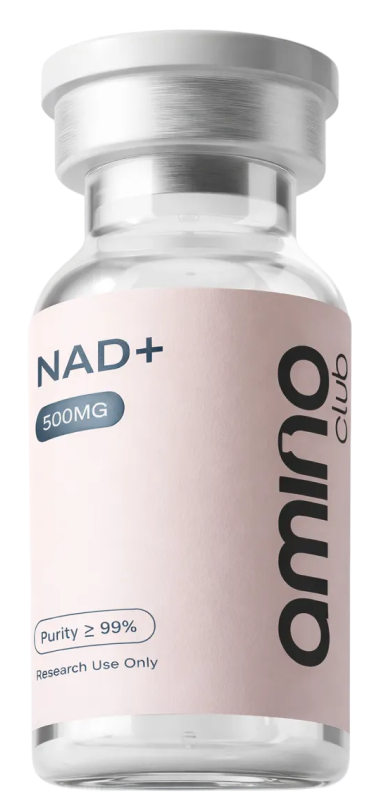
Longevity Peptide
A critical dinucleotide coenzyme that activates sirtuins and supports mitochondrial function, studied for cellular energy metabolism in research models.
50%
Decline by Age 50
NAD+ levels decrease with aging
7Sirtuins
Enzyme Activation
SIRT1-7 longevity pathways
500+reactions
Cellular Processes
Essential metabolic cofactor
1,518subjects
Clinical Study
Large-scale human research
ATPproduction
Energy Metabolism
Mitochondrial function
NAD+ is the essential substrate for sirtuins (SIRT1-7), a family of enzymes that regulate aging, inflammation, stress resistance, and metabolism. Without adequate NAD+, sirtuin activity declines, accelerating cellular aging.
NAD+ fuels poly-ADP-ribose polymerases (PARPs), enzymes critical for detecting and repairing DNA damage. Adequate NAD+ helps maintain genomic integrity and cellular health throughout aging.
NAD+ is essential for the electron transport chain in mitochondria, the cellular powerhouses that generate ATP. Declining NAD+ impairs energy production and contributes to age-related fatigue and dysfunction.
Key insight: NAD+ decline creates a 'pseudohypoxic' state that disrupts mitochondrial-nuclear communication
Human studies on NAD+ and aging
Largest NAD+ Aging Study to Date
Key finding: NAD+ levels decline significantly with age in men, especially in the 40-49 age group (β = -1.12). The decline becomes more pronounced after age 60 (β = -2.16).
Large community-based Chinese cohort
Documented effects from scientific studies
Essential substrate
SourceDamage response
SourceCellular metabolism
SourceEssential coenzyme
SourceNAD+ activates the sirtuin family of enzymes that regulate cellular aging processes
NAD+ is critical for the electron transport chain and ATP production
NAD+ powers DNA repair enzymes that maintain genomic integrity
Important: PARP and CD38 activity increases with age, consuming more NAD+
From clinical and research settings
NAD+ can be administered via IV infusion for direct delivery or through precursor supplementation. IV protocols vary based on individual needs and clinical setting.
Common wellness clinic approach
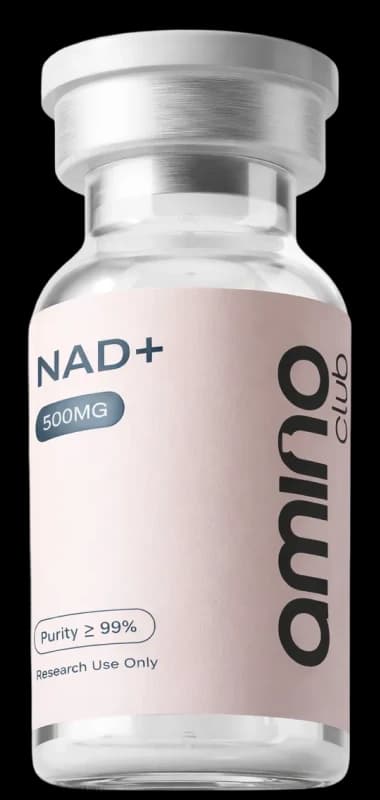
500mg NAD+
2-4 hour infusion
250-500mg
Every 2-4 weeks
Slow infusion rate reduces side effects
Sessions typically 2-6 hours depending on dose
Hydration before and during recommended
Initial sessions may require slower rates
For experienced recipients
750-1000mg
4-6 hour infusion
Only for those with prior NAD+ IV experience
Requires slower infusion rate
Medical supervision essential
Not recommended for first-time users
Direct IV bypasses digestive metabolism
Intracellular NAD+ pools maintained by salvage pathway
Commonly reported effects from IV administration
NAD+ IV therapy is generally well-tolerated when administered properly. Most side effects are mild and related to infusion rate rather than the compound itself.
Side effects are primarily related to infusion rate rather than total dose
Most effects resolve by slowing or pausing infusion
Side effects typically diminish with subsequent sessions
Cardiac arrhythmias (rare, in predisposed individuals)
Severe hypotension (very rare)
Allergic reactions (extremely rare)
Not recommended during pregnancy/breastfeeding
Chemical and structural properties
Essential dinucleotide coenzyme
Essential cofactor for multiple enzyme families
Stability and storage requirements
Common questions about NAD+
NAD+ (Nicotinamide Adenine Dinucleotide) is a coenzyme present in every cell of your body. It's essential for over 500 enzymatic reactions, including energy production in mitochondria, DNA repair via PARPs, and activation of longevity-related sirtuins. NAD+ levels naturally decline with age — by up to 50% between ages 40-60 — contributing to metabolic dysfunction and age-related conditions.
IV NAD+ delivers the coenzyme directly into your bloodstream with 100% bioavailability, bypassing digestive metabolism. Oral precursors like NMN and NR must be absorbed and converted into NAD+ through enzymatic pathways, with variable efficiency. IV administration provides immediate cellular access, though it requires clinical administration and is more time-intensive.
A 2022 study of 1,518 participants found that blood NAD+ levels significantly decline with age, particularly in men. The average whole blood NAD+ was 33.0 μmol/L, with men showing higher levels than women (34.5 vs 31.3 μmol/L). Significant decline was observed in the 40-49 age group, becoming more pronounced after age 60. This research supports the hypothesis that declining NAD+ contributes to aging processes.
NAD+ infusions typically last 2-6 hours depending on the dose (500mg-1000mg). Common experiences include temporary nausea, flushing, chest tightness, or cramping — these are usually managed by slowing the infusion rate. Most people feel energized after the session. Side effects generally diminish with subsequent treatments as tolerance develops.
NAD+ research has focused on age-related decline, metabolic dysfunction, and cellular energy support. Those interested typically include adults concerned about aging, individuals seeking to support mitochondrial function, and those looking to complement healthy lifestyle practices. NAD+ therapy should be discussed with a healthcare provider to determine appropriateness for individual circumstances.
Lyophilized (powder) NAD+ should be stored at -20°C, protected from light and moisture. Once reconstituted, solutions should be used promptly and kept refrigerated if not used immediately. NAD+ is sensitive to heat, light, and pH extremes. Proper handling and storage are essential to maintain potency and safety.
Peer-reviewed research
Not for human consumption. This product is sold exclusively for research and educational purposes. It is not intended to diagnose, treat, cure, or prevent any disease.
All clinical trial data and research findings presented on this page are sourced from peer-reviewed journals and official publications. They are provided for educational reference only and should not be interpreted as medical advice or product claims.
By purchasing this product, you confirm that you are a qualified researcher and will use it in accordance with all applicable laws and regulations.
Grant R, et al.