59%
Sleep Increase
Within 130 minutes of administration
⚠️ FOR RESEARCH PURPOSES ONLY — This compound is not FDA approved. All data presented is from clinical trials for educational reference.

Sleep & Recovery Peptide
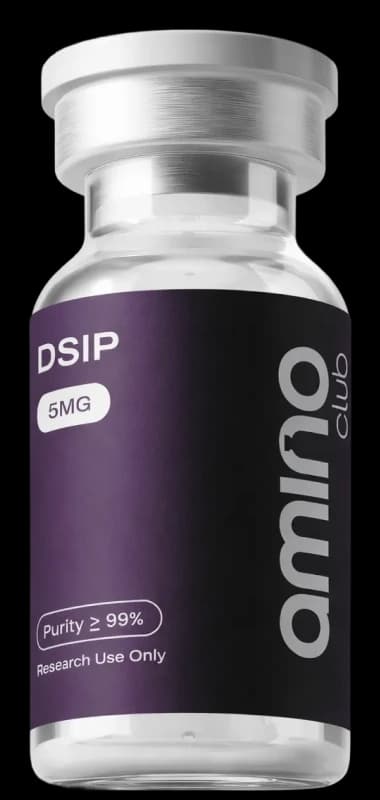
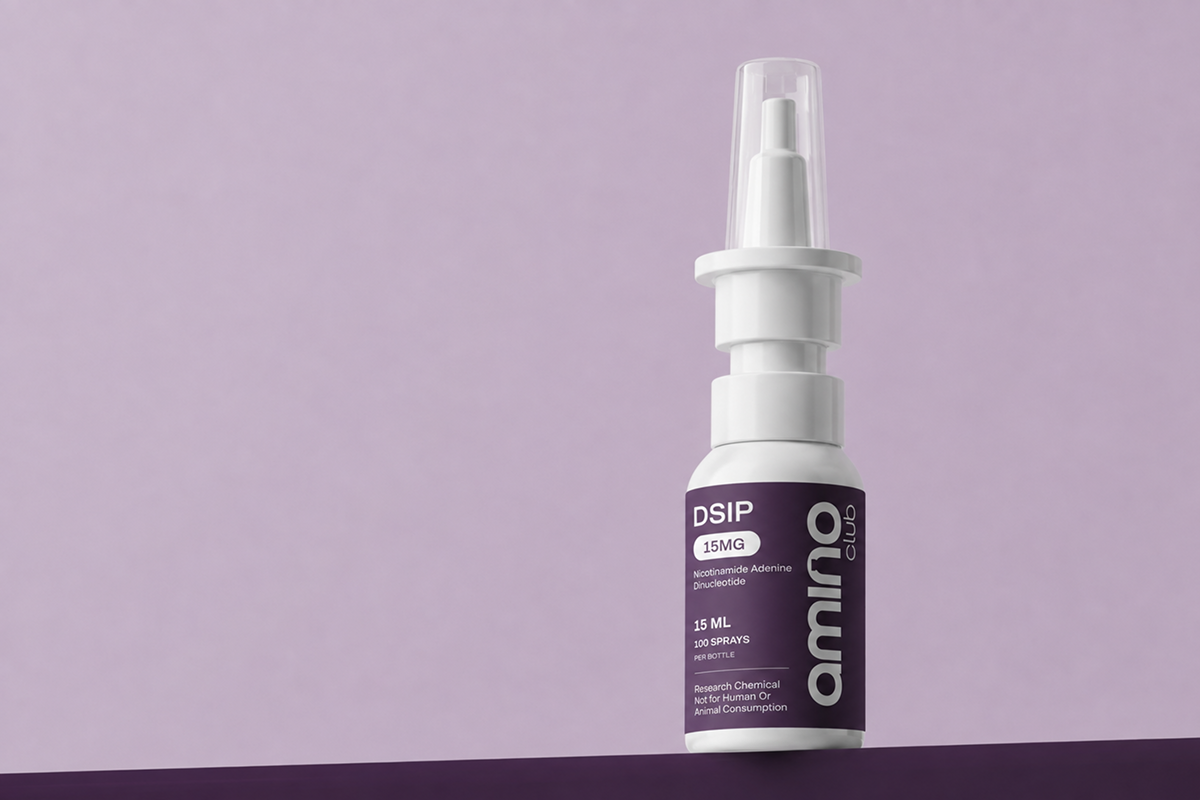
A 9-amino acid peptide that modulates delta-wave sleep architecture and circadian rhythm signaling, studied for sleep onset mechanisms in research models. Premium Research Peptide.
59%
Sleep Increase
Within 130 minutes of administration
97%
Symptom Relief
Opiate withdrawal (107 patients)
86%
Pain Reduction
Chronic pain patients (6/7)
NoLD50
Safety Record
No lethal dose ever determined
9amino acids
Nonapeptide
WAGGDASGE sequence
DSIP is synthesized in the hypothalamus and targets multiple sites in the brainstem. Unlike sedatives, it promotes natural sleep architecture by modulating circadian rhythms, neurotransmitters, and stress-response systems — without causing dependence or tolerance.
Circadian Rhythm Modulation
Regulates sleep-wake cycles
Normalizes disturbed sleep patterns
Effects persist for days after dosing
Endogenous Opioid System
Modulates pain perception
Blocked by naloxone
Supports withdrawal management
Hypothalamic-Pituitary-Adrenal Axis
Attenuates stress responses
Reduces cortisol secretion
Improves stress coping
Unlike most peptides, DSIP freely crosses the blood-brain barrier and can be absorbed from the gut without enzymatic degradation. It's even present in human breast milk at 10-30 ng/mL concentrations.
Key distinction: DSIP promotes sleep without sedation — it supports natural sleep mechanisms rather than forcing unconsciousness
Beyond sleep, DSIP influences thermoregulation, heart rate, blood pressure, pain threshold, and immune function. Effects are circadian-dependent and begin before behavioral signs of sleep appear.
Clinical trials and human studies
Increase in Total Sleep Time Within 130 Minutes
Trial details: 107 inpatients (60 opiate, 47 alcohol) received IV DSIP. Clinical symptoms and signs disappeared or improved markedly and rapidly in the vast majority of patients.
Consistent efficacy across multiple conditions
Key observation: DSIP's effects persisted for days after treatment, suggesting it 'reprograms' natural sleep patterns rather than providing temporary relief.
Multi-system benefits observed in research
Healthy volunteers
Source107 patients treated
Source6 of 7 responded
SourceCannot kill animals
SourceDSIP promotes delta-wave (slow-wave) sleep without sedative effects, improving sleep quality and next-day performance
Unique mechanism: Effects persist for several nights after treatment, suggesting circadian rhythm normalization
DSIP attenuates emotional and physiological stress responses while improving mood and coping behavior
Research demonstrates DSIP's ability to protect neurons and accelerate recovery from ischemic injury
DSIP modulates pain perception through interactions with endogenous opioid systems
Chronic pain patients improved
Opioid interaction: Antinociceptive effect blocked by naloxone, indicating opioid receptor involvement
From human clinical trials
DSIP has been administered in various clinical trials via intravenous injection. The standard research dose is 25 nmol/kg body weight, with effects persisting for multiple days after administration.
Most commonly used in human studies
25 nmol/kg
Daily IV injection
Loading phase
25 nmol/kg
Every 48-72 hours
Maintenance phase
Administered via slow intravenous infusion
Effects persist for several days after each dose
No tolerance development observed
Daytime dosing still improves next night's sleep
Alternative administration route
100-200 mcg
Before bed
Research setting
Subcutaneous administration studied in some protocols
Allows for at-home administration in research settings
May have different pharmacokinetic profile than IV
Short plasma half-life but prolonged biological effects
Effects on sleep persist for days after single dose
Present in human milk at 10-30 ng/mL
Remarkably well-tolerated in human studies
DSIP demonstrates an exceptional safety profile. No lethal dose (LD50) has ever been determined because it has proven impossible to kill an animal with DSIP regardless of dose — a remarkable finding for any bioactive compound.
DSIP's LD50 has never been determined because it has never proven possible to kill an animal regardless of the dose administered
No tolerance development with repeated dosing
No withdrawal symptoms upon discontinuation
Naturally occurring peptide in human body
Not FDA-approved for any indication
Research compound status
Used in clinical studies since 1977
Extensively studied but not commercialized
Technical specifications
Naturally occurring nonapeptide first isolated from rabbit brain in 1977
Handle with care to maintain potency
First isolated from rabbit brain in 1977 by Schoenenberger & Monnier
Common questions about DSIP research
DSIP (Delta Sleep-Inducing Peptide) is a naturally occurring nonapeptide first isolated from rabbit brain in 1977 by Swiss researchers Schoenenberger and Monnier. It's synthesized in the hypothalamus and found in neurons, peripheral organs, and plasma throughout the body. The peptide is also present in human breast milk at concentrations of 10-30 ng/mL, suggesting a natural role in infant sleep regulation.
Unlike sedatives and hypnotics, DSIP promotes natural sleep rather than inducing chemical sedation. It enhances delta-wave (slow-wave) sleep architecture, improves sleep efficiency, and — remarkably — its effects persist for days after administration. DSIP doesn't cause dependence, tolerance, or withdrawal symptoms. Studies show improved daytime alertness and performance alongside better nighttime sleep.
Human clinical trials have demonstrated: 59% increase in total sleep time within 130 minutes (healthy volunteers); higher sleep efficiency and shorter sleep latency in chronic insomniacs (RCT); 97% symptom relief in opiate withdrawal and 87% in alcohol withdrawal (107 patients); and 86% response rate in chronic pain patients with simultaneous reduction in depression. Effects on sleep persist for multiple nights after single dosing.
DSIP has an exceptional safety profile. Most remarkably, no lethal dose (LD50) has ever been determined because researchers have never been able to kill an animal with DSIP regardless of the dose administered. Side effects in human studies are minimal — occasional transient headaches, nausea, or vertigo. No tolerance or dependence develops. As a naturally occurring endogenous peptide found in breast milk, DSIP appears to have inherent biological safety.
In clinical trials, DSIP is typically administered via slow intravenous infusion at 25 nmol/kg body weight. A common protocol involves daily injections for 5 days, followed by injections every 48-72 hours. Interestingly, daytime administration still improves nighttime sleep — the peptide appears to 'reset' circadian rhythms rather than directly inducing sedation. Subcutaneous administration has also been studied.
Beyond sleep, DSIP has demonstrated: antinociceptive (pain-relieving) effects blocked by naloxone, suggesting opioid pathway involvement; neuroprotective effects in stroke models with accelerated motor recovery; anticonvulsant activity with increased seizure threshold; stress attenuation and improved coping behavior; and antihypertensive effects in animal models. Research has explored its use in substance withdrawal, chronic pain, and neurological protection.
Despite promising clinical results since 1977, DSIP has never been commercialized as a pharmaceutical. This may be due to its short plasma half-life (7-8 minutes), challenges in drug delivery, or lack of patent protection for a naturally occurring peptide. It remains a research compound studied for its unique mechanism of promoting natural sleep without sedation.
Peer-reviewed research
Not for human consumption. This product is sold exclusively for research and educational purposes. It is not intended to diagnose, treat, cure, or prevent any disease.
All clinical trial data and research findings presented on this page are sourced from peer-reviewed journals and official publications. They are provided for educational reference only and should not be interpreted as medical advice or product claims.
By purchasing this product, you confirm that you are a qualified researcher and will use it in accordance with all applicable laws and regulations.
Bes F, Hofman W, Schuur J, Van Boxtel C