Similarto BZD
Anxiolytic Effect
Comparable to benzodiazepines
⚠️ FOR RESEARCH PURPOSES ONLY — This compound is not FDA approved. All data presented is from clinical trials for educational reference.

Cognitive & Anxiolytic Peptide
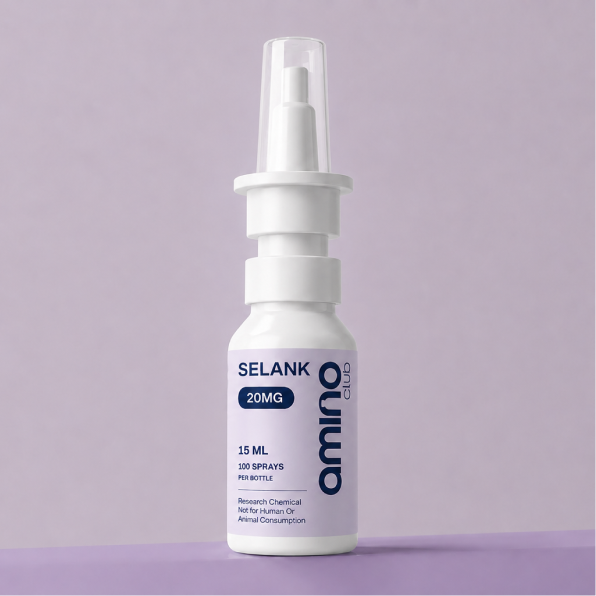
A 7-amino acid synthetic heptapeptide derived from tuftsin that modulates GABAergic neurotransmission and BDNF expression, studied for anxiolytic and nootropic effects in clinical research. Premium Research Peptide.
Similarto BZD
Anxiolytic Effect
Comparable to benzodiazepines
BDNF↑
Neuroprotection
Upregulates brain-derived neurotrophic factor
92.8%
Bioavailability
Intranasal administration
NoDependence
Safety Profile
No sedation, amnesia, or withdrawal
7amino acids
Heptapeptide
TKPRPGP sequence
Selank is a synthetic analog of tuftsin, a naturally occurring immunomodulatory peptide. Unlike benzodiazepines, Selank modulates GABA receptors without causing sedation, dependence, or cognitive impairment. It also enhances BDNF expression and inhibits enkephalin-degrading enzymes, providing both anxiolytic and nootropic effects.
Gamma-Aminobutyric Acid Receptor Modulation
Allosteric modulation of GABA-A receptors
Reduces anxiety without sedation
Enhances calming neurotransmission
Brain-Derived Neurotrophic Factor
Upregulates BDNF expression
Supports synaptic plasticity
Enhances memory consolidation
Endogenous Opioid Peptides
Inhibits enkephalin-degrading enzymes
Prolongs natural stress-relief signals
Modulates emotional responses
Clinical studies confirm Selank's anxiolytic effect is comparable to benzodiazepine tranquilizers at low doses, but is not accompanied by unwanted side effects such as amnesia, withdrawal, and dependence.
Key distinction: Selank allosterically modulates GABA-A receptors rather than directly binding to benzodiazepine sites, preserving cognitive function while reducing anxiety
Unlike typical anxiolytics that impair cognition, Selank demonstrates both anti-anxiety and cognitive-enhancing properties. Research shows it normalizes serotonin and dopamine levels while boosting BDNF.
Human clinical trials and preclinical studies
Treated in GAD Clinical Trial vs. Medazepam
Trial details: 62 patients with generalized anxiety disorder and neurasthenia were studied. Patient's state was assessed with Hamilton, Zung, and CGI psychometric scales. The anxiolytic effects of both drugs were similar, but Selank also had antiasthenic and psychostimulant effects.
Results from human clinical trials
Unique finding: Combined administration of Selank with diazepam amplified anxiolytic action, suggesting Selank not only modulates GABA-A receptors but may increase the affinity of benzodiazepines to these receptors.
Multi-system benefits observed in research
Supports brain plasticity
SourceImmunomodulatory effects
SourcePreserves mental clarity
SourceInhibits degrading enzymes
SourceSelank enhances memory consolidation, attention, and learning through BDNF upregulation and neurotransmitter optimization
Dual action: Unlike typical anxiolytics, Selank provides cognitive enhancement alongside anxiety reduction
Selank modulates the stress response system, helping maintain emotional balance under challenging conditions
As a tuftsin analog, Selank retains immunomodulatory properties, influencing cytokine production and immune cell activity
Selank protects against cognitive decline by maintaining BDNF levels and supporting neuronal health
Protected in ethanol model
Research finding: Selank prevented ethanol-induced BDNF alterations in hippocampus and prefrontal cortex
From human clinical trials
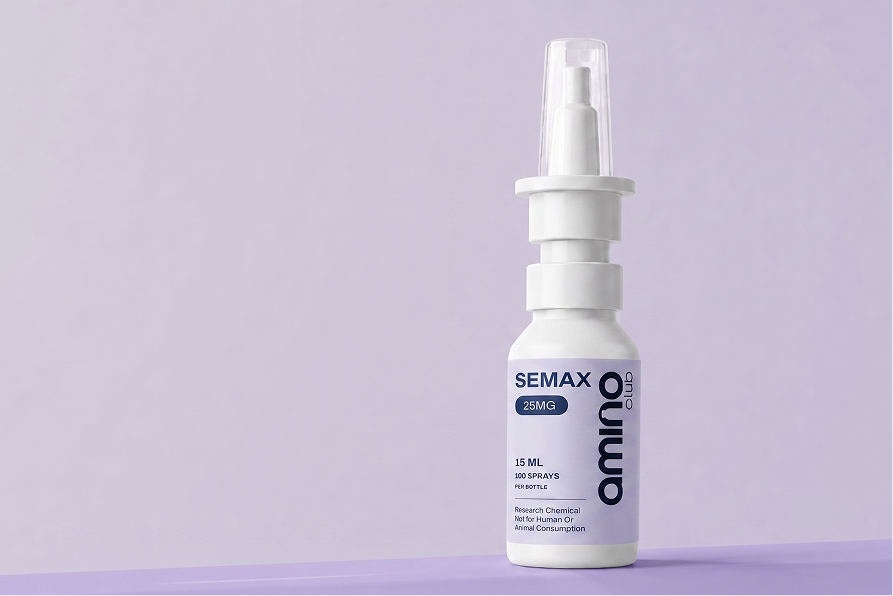
Selank has been administered in clinical trials primarily via intranasal route. The Russian clinical formulation is a 0.15% solution (75 mcg per drop), typically given as 2 drops in each nostril, 3 times daily for 14 days.
Russian approved formulation for GAD
450 mcg
3x daily intranasal
2 drops per nostril (150 mcg per dose)
0.15% solution (75 mcg per drop)
Total daily dose: 1,350 mcg (1.35 mg)
Treatment duration: typically 14 days
Consider 1-3 week break between cycles
Used in some clinical studies
2,700 mcg
3x daily intranasal
36 drops total, split in 3 doses
Higher doses studied in some trials
Up to 2.7 mg/day used safely
Maximum 21 days in clinical studies
Intranasal preferred for CNS delivery
Preclinical and translational studies
300 μg/kg
Once daily intranasal
Most effective anxiolytic dose
300 μg/kg shown most effective in animal studies
Optimal for peptide delivery to CNS
Single daily administration studied
Short plasma half-life but prolonged pharmacodynamic effects
Intranasal administration optimal for CNS delivery
Multiple daily doses recommended due to short half-life
Exceptionally well-tolerated in clinical studies
Clinical studies report excellent tolerability with absence of sedation, amnesia, or cognitive dulling. No evidence of physical dependence or withdrawal symptoms has been observed, representing a significant advantage over benzodiazepine anxiolytics.
Unlike benzodiazepines, Selank does not cause sedation, muscle relaxation, memory impairment, tolerance, or withdrawal symptoms
No dependence observed in any clinical trials
No withdrawal symptoms upon discontinuation
Breaks down into natural amino acids
Approved in Russia (2009) and Ukraine for GAD
Not FDA-approved in the United States
Research compound status in most countries
Available by prescription in Russia as 0.15% nasal drops
Technical specifications
Synthetic heptapeptide analog of tuftsin, an immunomodulatory tetrapeptide derived from IgG
Handle with care to maintain potency
Developed at the Institute of Molecular Genetics of the Russian Academy of Sciences
Common questions about Selank research
Selank is a synthetic heptapeptide (7 amino acids: Thr-Lys-Pro-Arg-Pro-Gly-Pro) developed at the Institute of Molecular Genetics of the Russian Academy of Sciences. It's derived from tuftsin, a naturally occurring immunomodulatory tetrapeptide found in the Fc region of immunoglobulin G (IgG). The C-terminus was extended with Pro-Gly-Pro to enhance metabolic stability and prolong its duration of action.
While both Selank and benzodiazepines reduce anxiety through the GABAergic system, they work differently. Benzodiazepines directly bind to specific benzodiazepine sites on GABA-A receptors, causing sedation, memory impairment, and physical dependence. Selank allosterically modulates GABA-A receptors without these side effects. Clinical trials show comparable anxiolytic efficacy but Selank also has antiasthenic (anti-fatigue) and psychostimulatory effects, plus cognitive enhancement rather than impairment.
A key randomized controlled trial studied 62 patients with generalized anxiety disorder (GAD) and neurasthenia, comparing intranasal Selank (30 patients) to oral medazepam (32 patients) for 14 days. Both showed similar anxiolytic effects on Hamilton, Zung, and CGI scales, but Selank also demonstrated antiasthenic and psychostimulatory properties. Importantly, Selank increased enkephalin activity in blood serum, correlating with anxiety reduction. No sedation, dependence, or withdrawal was observed.
Selank was approved by the Russian Federation Ministry of Health in 2009 and is available by prescription in Russia and Ukraine as a 0.15% intranasal solution for the treatment of generalized anxiety disorder. It is not approved by the FDA in the United States or by regulatory agencies in most other countries, where it remains classified as a research compound.
In clinical trials, Selank is administered intranasally as a 0.15% solution. The standard protocol is 2 drops (75 mcg per drop) in each nostril, 3 times daily for 14 days (total ~1,350 mcg/day). Some studies used up to 2,700 mcg/day for 21 days. The intranasal route provides 92.8% bioavailability and optimal delivery to the CNS. Due to its short plasma half-life (2-3 minutes), multiple daily doses are necessary.
Selank demonstrates nootropic (cognitive-enhancing) properties alongside its anxiolytic effects. Research shows it upregulates BDNF (brain-derived neurotrophic factor), a key protein for learning, memory, and neural plasticity. In one study, Selank protected against ethanol-induced memory impairment by normalizing BDNF levels in the hippocampus and prefrontal cortex. It also modulates serotonin and dopamine, neurotransmitters crucial for mood and cognition.
Selank has an excellent safety profile in clinical studies. It breaks down into natural amino acids in the body. Unlike benzodiazepines, it causes no sedation, amnesia, cognitive impairment, muscle relaxation, tolerance, or physical dependence. Reported side effects are minimal — occasional mild nasal irritation, transient headaches in the first few days, and vivid dreams early in treatment. No serious adverse events have been reported in published studies.
Research suggests Selank may enhance the effects of benzodiazepines when used together. One study showed that combining Selank with diazepam was more effective at reducing anxiety than either alone, suggesting Selank may increase benzodiazepine receptor affinity. However, drug interactions are not extensively characterized, and combination use should only occur under appropriate research protocols or medical supervision in jurisdictions where it is approved.
Peer-reviewed research
Zozulia AA, Neznamov GG, Siuniakov TS, et al.
Kasian A, Kolomin T, Andreeva L, et al.
Volkova A, Shadrina M, Kolomin T, et al.
Kozlovskii II, Andreeva LA, Myasoedov NF
Medvedev VE, Tereshchenko ON, Israelian AIu, et al.
Zozulya AA, Kost NV, Yu Sokolov O, et al.
Not for human consumption. This product is sold exclusively for research and educational purposes. It is not intended to diagnose, treat, cure, or prevent any disease.
All clinical trial data and research findings presented on this page are sourced from peer-reviewed journals and official publications. They are provided for educational reference only and should not be interpreted as medical advice or product claims.
By purchasing this product, you confirm that you are a qualified researcher and will use it in accordance with all applicable laws and regulations.
Cognitive & stress support