1.4×BDNF
BDNF Increase
Protein levels in hippocampus
⚠️ FOR RESEARCH PURPOSES ONLY — This compound is not FDA approved. All data presented is from clinical trials for educational reference.

Cognitive & Neuroprotective Peptide
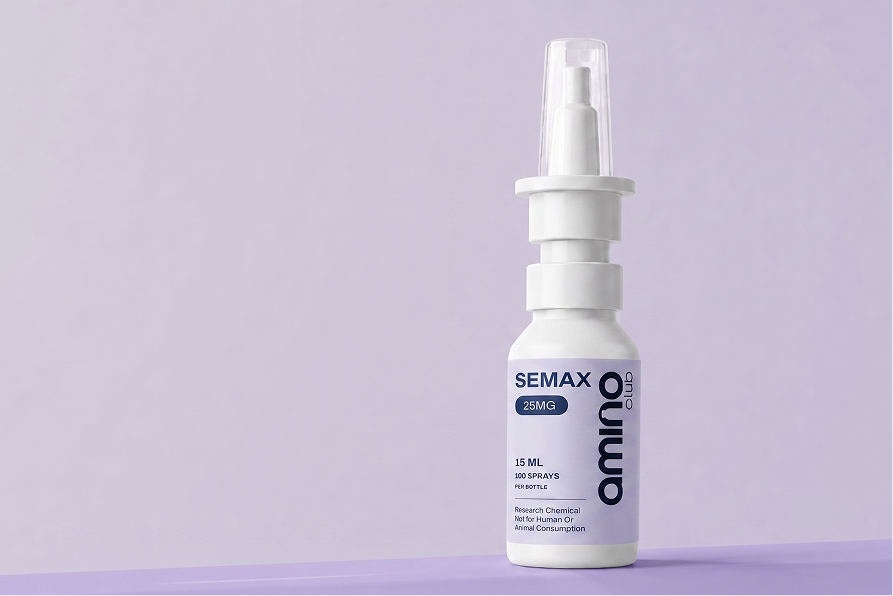
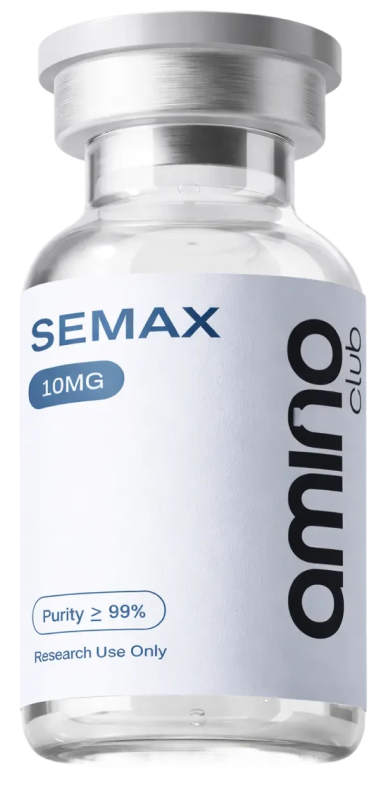
A 7-amino acid synthetic heptapeptide analog of ACTH (4-10) that upregulates BDNF expression and modulates the TrkB signaling pathway, studied for cognitive enhancement and neuroprotection in clinical research. Premium Research Peptide.
1.4×BDNF
BDNF Increase
Protein levels in hippocampus
3×mRNA
Gene Expression
Exon III BDNF mRNA increase
24heffect
Duration
Extended by Pro-Gly-Pro modification
1.6×TrkB
Receptor Activation
TrkB phosphorylation increase
7amino acids
Heptapeptide
MEHFPGP sequence
Semax is a synthetic analog of ACTH (4-10) extended with Pro-Gly-Pro at the C-terminus for enhanced stability and prolonged effects. It upregulates brain-derived neurotrophic factor (BDNF), activates the TrkB receptor pathway, and influences the expression of genes involved in neuroplasticity and vascular function. Unlike the parent ACTH hormone, Semax lacks hormonal activity but retains potent nootropic effects.
Brain-Derived Neurotrophic Factor / TrkB Receptor
1.4-fold increase in BDNF protein levels
1.6-fold increase in TrkB phosphorylation
Enhanced synaptic plasticity and learning
Melanocortin Receptor Modulation
Potential interaction with MC receptors
Modulates stress response pathways
May contribute to cognitive effects
Vascular Endothelial Growth Factor Pathway
Upregulates vascular system genes
Promotes angiogenesis after ischemia
Supports neurovascular function
A single intranasal application of Semax (50 mcg/kg) results in significant increases in BDNF protein and mRNA levels in the hippocampus, the brain region critical for memory and learning.
Key finding: 3-fold increase in exon III BDNF mRNA and 2-fold increase in trkB mRNA levels were observed in rat hippocampus following Semax administration
In conditions of focal brain ischemia, Semax influences the expression of genes that promote the formation and functioning of the vascular system, supporting recovery after stroke.
Human clinical trials and preclinical studies
BDNF mRNA Expression After Single Dose
Study details: Research conducted at the Institute of Molecular Genetics, Russian Academy of Sciences, demonstrated that intranasal Semax (50 mcg/kg) produces rapid and significant increases in neurotrophic factor expression in the rat hippocampus, with animals showing improved conditioned avoidance reactions.
Results from preclinical and clinical research
Clinical use: Semax is approved in Russia as a 0.1% or 1% nasal spray for treating ischemic stroke, traumatic brain injury, and cognitive impairment. Early rehabilitation with Semax increases plasma BDNF, speeds functional recovery, and improves motor performance.
Multi-system benefits observed in research
Supports brain plasticity
SourceClinical use in Russia
SourcePromotes angiogenesis
SourceACTH analog without hormonal activity
SourceSemax enhances learning, memory, and attention through BDNF upregulation and TrkB pathway activation in the hippocampus
Research support: Animals treated with Semax showed distinct improvement in conditioned avoidance reactions, indicating enhanced cognitive function
Semax is approved in Russia for stroke treatment, demonstrating clinical efficacy in improving motor function and functional recovery
Semax promotes the expression of genes involved in vascular formation and function, supporting brain blood supply after injury
As an ACTH analog, Semax may modulate stress response pathways through melanocortin receptor interactions without hormonal side effects
Melanocortin pathway modulation
Key advantage: Unlike ACTH, Semax lacks hormonal activity while retaining beneficial cognitive and neuroprotective effects
From clinical use in Russia and preclinical studies
Semax is administered intranasally in Russia as a 0.1% solution for cognitive enhancement or 1% solution for stroke treatment. The Pro-Gly-Pro extension increases the duration of effects to 20-24 hours compared to native ACTH fragments.
Russian approved formulation for cognitive enhancement
200-600 mcg
2-3x daily intranasal
0.1% solution (2-3 drops per nostril)
0.1% solution standard for cognitive enhancement
Total daily dose: 400-1,800 mcg
Treatment duration: typically 10-14 days
Cycles may be repeated after 2-4 week break
Higher concentration for neuroprotection
2,000-6,000 mcg
3-4x daily intranasal
1% solution for stroke treatment
1% solution used for stroke and severe cognitive impairment
Higher doses for acute neuroprotection
Combined with rehabilitation therapy
Medical supervision required
Preclinical studies dosing
50 mcg/kg
Single intranasal
Effective dose in animal studies
50 mcg/kg showed significant BDNF upregulation
Intranasal route preferred for CNS delivery
Effects observed within hours
Duration: 20-24 hours
Pro-Gly-Pro C-terminal extension provides metabolic stability
Effects last 20-24 hours despite short plasma half-life
Intranasal administration optimal for CNS delivery
Poor oral bioavailability typical for peptides
Generally well-tolerated in clinical studies
Semax has been used clinically in Russia since the 1990s with a favorable safety profile. Unlike ACTH, it lacks hormonal activity and does not affect the hypothalamic-pituitary-adrenal axis. Most reported side effects are mild and localized to the administration site.
Unlike ACTH, Semax does not stimulate the adrenal cortex or affect cortisol levels. It retains nootropic properties without hormonal activity.
No dependence observed in clinical use
No withdrawal symptoms reported
Breaks down into natural amino acids
Approved in Russia since 1990s for stroke and cognitive impairment
Available as 0.1% and 1% nasal spray formulations
Not FDA-approved in the United States
Research compound status in most Western countries
Technical specifications
Synthetic heptapeptide analog of ACTH (4-10) with C-terminal Pro-Gly-Pro extension for enhanced stability
Handle with care to maintain potency
Developed at the Institute of Molecular Genetics of the Russian Academy of Sciences
Common questions about Semax research
Semax is a synthetic heptapeptide (7 amino acids: Met-Glu-His-Phe-Pro-Gly-Pro) developed at the Institute of Molecular Genetics of the Russian Academy of Sciences. It's an analog of ACTH (4-10), the adrenocorticotropic hormone fragment responsible for cognitive effects. The C-terminus was extended with Pro-Gly-Pro to enhance metabolic stability and prolong its duration of action from minutes to 20-24 hours.
While Semax is derived from ACTH (4-10), it lacks the hormonal activity of the parent hormone. ACTH stimulates the adrenal cortex to produce cortisol, but Semax does not affect the hypothalamic-pituitary-adrenal (HPA) axis. Semax retains the nootropic and neuroprotective properties of ACTH fragments without causing hormonal side effects, making it suitable for cognitive enhancement applications.
Research demonstrates that Semax increases BDNF protein levels by 1.4-fold and BDNF mRNA by 3-fold in the hippocampus. It also increases TrkB receptor phosphorylation by 1.6-fold. In clinical use in Russia, Semax has shown efficacy in stroke recovery, improving motor function and functional recovery when combined with rehabilitation. Animals treated with Semax show improved learning and memory in conditioned avoidance tests.
Semax has been approved in Russia since the 1990s for treating ischemic stroke, traumatic brain injury, and cognitive impairment. It's available as 0.1% nasal drops for cognitive enhancement and 1% solution for stroke treatment. It is not approved by the FDA in the United States or by regulatory agencies in most Western countries, where it remains classified as a research compound.
Semax is administered intranasally as the preferred route for CNS delivery. In Russian clinical practice, the standard protocol uses 0.1% solution (2-3 drops per nostril, 2-3 times daily) for cognitive enhancement, with treatment courses of 10-14 days. For stroke treatment, a 1% solution is used at higher doses. The intranasal route provides good bioavailability and direct access to the brain.
Semax and Selank are both Russian-developed peptides but have different origins and mechanisms. Semax is an ACTH (4-10) analog primarily targeting BDNF/TrkB pathways for cognitive enhancement and neuroprotection. Selank is a tuftsin analog that modulates the GABAergic system for anxiolytic effects. Semax is more focused on cognitive enhancement and stroke recovery, while Selank is more anxiolytic. Both are approved in Russia and can be used together.
Semax has been used clinically in Russia for over 30 years with a favorable safety profile. Unlike ACTH, it does not affect cortisol levels or the HPA axis. Reported side effects are generally mild and include occasional nasal irritation, mild headache, and transient dizziness. No dependence, tolerance, or withdrawal symptoms have been reported. However, Western clinical trial data is limited, and long-term safety studies in Western populations are lacking.
The Pro-Gly-Pro (PGP) extension at the C-terminus of Semax provides protection against peptidase degradation, extending its duration of action from minutes (native ACTH 4-10) to 20-24 hours. This modification was specifically designed in the 1970s to create a more practical cognitive enhancer that could be administered once or twice daily rather than requiring continuous infusion.
Peer-reviewed research
Dolotov OV, Karpenko EA, Inozemtseva LS, et al.
Medvedeva EV, Dmitrieva VG, Povarova OV, et al.
Shadrina M, Kolomin T, Agapova T, et al.
Not for human consumption. This product is sold exclusively for research and educational purposes. It is not intended to diagnose, treat, cure, or prevent any disease.
All clinical trial data and research findings presented on this page are sourced from peer-reviewed journals and official publications. They are provided for educational reference only and should not be interpreted as medical advice or product claims.
By purchasing this product, you confirm that you are a qualified researcher and will use it in accordance with all applicable laws and regulations.
Nootropic & neuroprotective support