36%
HBV Response
vs 19% control (pooled)
ā ļø FOR RESEARCH PURPOSES ONLY ā This compound is not FDA approved. All data presented is from clinical trials for educational reference.

Longevity Peptide
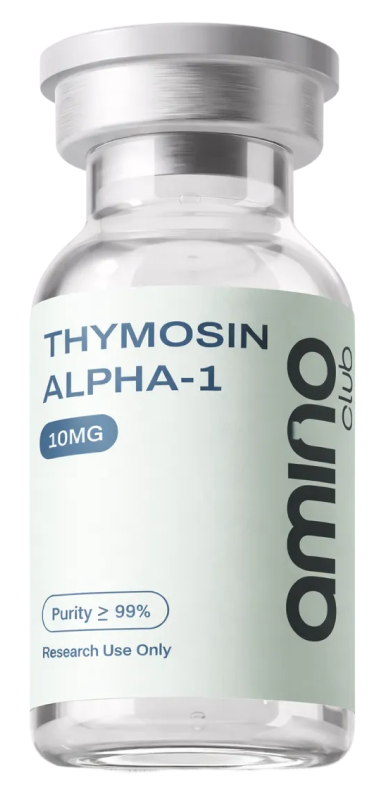
A 28-amino acid acetylated polypeptide derived from prothymosin alpha that activates Toll-like receptor signaling on dendritic cells and enhances T lymphocyte maturation in clinical immune modulation research. Premium Research Peptide.
36%
HBV Response
vs 19% control (pooled)
28amino acids
Natural Peptide
Thymus-derived
TLRactivation
Dual Pathway
TLR2 + TLR9 signaling
Minimalside effects
Safety Profile
Well tolerated in trials
Thymosin Alpha-1 is a naturally occurring 28-amino acid peptide originally isolated from the thymus gland. It acts as a master regulator of the immune system, activating dendritic cells through Toll-like receptors (TLR2 and TLR9), promoting T cell maturation, and enhancing the body's ability to mount coordinated immune responses against infections and abnormal cells.
Toll-Like Receptors 2 and 9
Activates myeloid and plasmacytoid dendritic cells
Initiates innate immune signaling cascades
Stimulates cytokine production (IFN-α, IL-12)
T Lymphocyte Differentiation
Promotes CD4+ helper T cell differentiation
Enhances CD8+ cytotoxic T cell activity
Restores T cell function in immunocompromised states
Natural Killer Cell Activation
Increases natural killer cell cytotoxicity
Enhances innate antiviral defense
Improves immune surveillance
Thymosin Alpha-1 acts through TLR2 and TLR9 on dendritic cells ā the immune system's antigen-presenting sentinels. By activating both myeloid and plasmacytoid DCs, it triggers complementary innate immune pathways: Type I interferon production (antiviral) and IL-12 signaling (T cell activation).
Unlike simple immune stimulants, Thymosin Alpha-1 modulates the immune response ā enhancing it when suppressed (infections, aging, cancer) while also activating tolerogenic pathways through IDO enzyme induction in dendritic cells. This bidirectional activity helps prevent overactivation while boosting defense.
Bidirectional action: Enhances immune function in suppressed states while activating regulatory pathways to prevent harmful overactivation ā a critical distinction from simple immune boosters.
Pooled analysis of randomized controlled hepatitis B trials
Virological Response Rate (vs 19% Control)
Global approval: Based on these and other trials, thymalfasin (Zadaxin) is approved in over 35 countries for chronic hepatitis B and C treatment. No significant side effects observed in any trial.
Thymosin Alpha-1 shows a delayed therapeutic response that continues to improve 12+ months after treatment completion
Delayed response pattern: A hallmark of Thymosin Alpha-1 therapy is the accumulating response after treatment cessation ā virological clearance rates continue to improve for 12+ months after the last dose, reflecting durable immune system reprogramming.
Broad immune modulation applications
vs 19% control
SourceHepatitis B & C
SourceWell tolerated long-term
SourceInnate + adaptive immunity
SourceExtensively studied against hepatitis B/C, HIV, influenza, and bacterial infections including Pseudomonas. Enhances both innate and adaptive immune responses to pathogens.
Thymosin Alpha-1 has been shown to enhance vaccine response rates, particularly in immunocompromised and elderly populations who typically mount suboptimal responses.
Vaccine efficacy
Key application: Particularly valuable for elderly and immunocompromised patients who respond poorly to standard vaccination schedules.
As the thymus involutes with age, endogenous Thymosin Alpha-1 production declines. Supplementation has been studied to counteract age-related immune decline (immunosenescence).
From clinical trials and post-marketing data
Thymosin Alpha-1 has an exceptionally favorable safety profile. Many patients taking Zadaxin do not experience side effects. No serious adverse events have been attributed to the drug in clinical trials.
No significant side effects in randomized controlled trials
ALT flare may occur during HBV treatment (expected, not an AE)
No drug interactions reported to date
Technical specifications
Synthetic acetylated polypeptide identical to human thymosin alpha-1
Common questions about Thymosin Alpha-1 research
Thymosin Alpha-1 is a 28-amino acid peptide naturally produced by the thymus gland ā the organ responsible for T cell maturation and immune system education. It was first isolated from thymic tissue by Allan Goldstein at George Washington University. The synthetic version (thymalfasin/Zadaxin) is chemically identical to the human peptide and is approved in over 35 countries for hepatitis B and C treatment.
Thymosin Alpha-1 (as Zadaxin/thymalfasin) is not FDA approved in the United States, but it is approved in over 35 countries worldwide for the treatment of chronic hepatitis B and C. It has undergone Phase 2 and Phase 3 clinical trials in the US. It is widely used in Asia, Europe, and South America as both a standalone treatment and combination therapy with interferon.
Unlike simple immune stimulants, Thymosin Alpha-1 is a true immune modulator with bidirectional activity. It enhances immune function when suppressed (via TLR2/9 activation of dendritic cells and T cell maturation) while also activating regulatory pathways (IDO enzyme induction) to prevent harmful overactivation. This makes it useful in both immunosuppressed states (infections, aging, cancer) and conditions where immune balance is critical (sepsis, autoimmunity).
Beyond its approved indications for hepatitis B and C, Thymosin Alpha-1 has been studied in: sepsis and critical care (immune restoration), cancer (adjuvant to chemotherapy for HCC, NSCLC, RCC, melanoma), vaccine enhancement (particularly in elderly/immunocompromised), HIV (adjunctive therapy), COVID-19 (immune modulation in severe cases), mold toxicity, psoriatic arthritis, and age-related immune decline (immunosenescence).
Thymosin Alpha-1 has one of the most favorable safety profiles of any immune-modulating peptide. In clinical trials, many patients experienced no side effects at all. The most commonly reported effects were mild injection site reactions (redness, discomfort), transient joint aches, and local muscle atrophy at repeated injection sites. No serious adverse events have been attributed to the drug, and no drug interactions have been reported. It has been safely used in elderly and immunocompromised patients.
Peer-reviewed research
Dominari A, Hathaway III D, Pandav K, et al.
Chien RN, Liaw YF, Chen TC, et al.
Tuthill C, Rios I, McBeath R.
Romani L, Bistoni F, Perruccio K, et al.
Rost KL, et al.
Not for human consumption. This product is sold exclusively for research and educational purposes. It is not intended to diagnose, treat, cure, or prevent any disease.
All clinical trial data and research findings presented on this page are sourced from peer-reviewed journals and official publications. They are provided for educational reference only and should not be interpreted as medical advice or product claims.
By purchasing this product, you confirm that you are a qualified researcher and will use it in accordance with all applicable laws and regulations.
Immune & longevity peptides