33.3%
Telomere Growth
Average increase in human lymphocytes
⚠️ FOR RESEARCH PURPOSES ONLY — This compound is not FDA approved. All data presented is from clinical trials for educational reference.
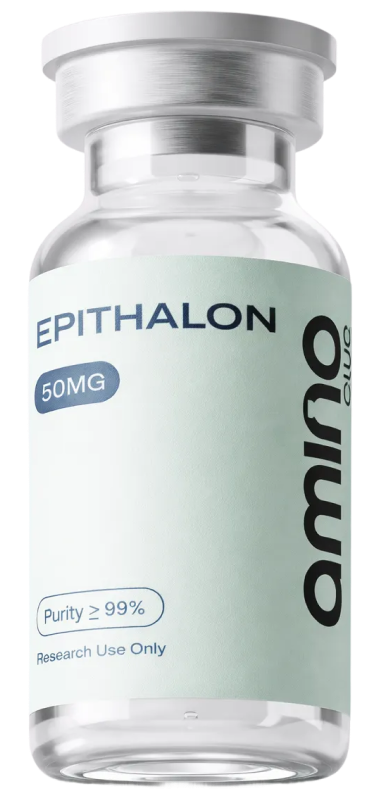
Longevity Peptide
A 4-amino acid synthetic tetrapeptide modeled on pineal gland epithalamin that activates telomerase and modulates circadian gene expression in preclinical and early human studies. Premium Research Peptide.
33.3%
Telomere Growth
Average increase in human lymphocytes
5pathways
Aging Hallmarks
Multi-pathway geroprotector
1.6×
Melatonin Boost
Urinary metabolite increase vs placebo
44passages
Hayflick Override
vs 34 in untreated controls
Epithalon (Ala-Glu-Asp-Gly) is a synthetic tetrapeptide modeled on epithalamin, a natural extract from the pineal gland. Unlike most anti-aging interventions that target a single hallmark of aging, Epithalon acts on five simultaneously: telomere maintenance, epigenetic regulation, oxidative stress resilience, immune recalibration, and circadian rhythm restoration.
Telomerase Reverse Transcriptase
Reactivates telomerase in somatic cells
Elongates shortened telomeres
Extends replicative lifespan beyond Hayflick limit
Melatonin Synthesis Pathway
Upregulates AANAT enzyme for melatonin production
Modulates Clock, Cry2, and Csnk1e gene expression
Restores youthful cortisol rhythm patterns
Chromatin Remodeling & Gene Expression
Binds promoter regions of telomerase gene
Reverses age-related heterochromatinization
Loosens chromatin structure for gene accessibility
Keap1/Nrf2 Signaling Pathway
Increases SOD-1 and catalase expression
Reduces intracellular ROS levels
Preserves mitochondrial membrane potential
Epithalon can enter cell nuclei and bind specific DNA sequences (ATTTC motifs) in telomerase gene promoter regions, reactivating telomerase expression in somatic cells where it is normally silenced.
Landmark finding: Human fetal fibroblasts treated with Epithalon divided beyond 44 passages, compared to just 34 in untreated controls — overcoming the Hayflick limit while maintaining youthful cell morphology.
Summary of preclinical and early clinical findings
Average Telomere Length Increase in Human Lymphocytes
Study context: In human fetal lung fibroblasts, Epithalon induced telomere elongation to sizes comparable to early passages. Treated cells made 10 extra divisions and continued dividing beyond the control endpoint.
From in vitro cell studies to early human clinical data
Note: Most studies are preclinical (cell culture and animal models). Large-scale randomized controlled human trials have not yet been completed.
Note: Data from a 75-woman randomized study with 0.5 mg/day sublingual Epithalon for 20 days. Gene expression changes were statistically significant.
Epithalon has been tested across multiple species for lifespan effects
Other benefits observed in research
Restored youthful melatonin patterns in aged monkeys
Goncharova et al. 2001IL-2 upregulation and T cell rebalancing
Kazakova et al. 2002Reduced chromosomal aberrations in aged mice
Rosenfeld et al. 2002Reduced mammary tumor incidence in HER-2/neu mice
Anisimov et al. 2002Epithalon stimulates melatonin synthesis by upregulating AANAT and pCREB enzymes in pinealocytes, and restores youthful cortisol rhythms in aged primates.
Clinical finding: In a 75-woman randomized study, 20 days of sublingual Epithalon (0.5 mg/day) significantly modulated circadian gene expression.
Epithalon activates the Keap1/Nrf2 signaling pathway, boosting endogenous antioxidant enzyme expression and protecting cells from oxidative damage.
Key result: In human skin fibroblasts, Epithalon reduced aging biomarkers p16 and p21, preserved mitochondrial integrity, and lowered oxidative damage markers.
Early research shows Epithalon promotes neuronal differentiation, increases dendritic branching, and reduces oxidative DNA damage in neural cells.
Case study: A 79-year-old patient receiving Epithalon as part of combination therapy showed biological age reduction of 7.9 years and improved cognitive scores.
Epithalon recalibrates immune function by upregulating IL-2 in aged tissues, increasing CD4+ T cells, and preserving CD8+ splenocyte homeostasis.
Key Cytokine Upregulated
Research finding: Effects are age-dependent — Epithalon shows strongest immune recalibration in aged organisms, suggesting restorative rather than stimulatory action.
What preclinical and early clinical studies report
Epithalon has demonstrated a favorable safety profile across published animal studies and small human trials. No serious adverse events have been reported in the literature. However, comprehensive long-term safety data in humans is limited.
While Epithalon activates telomerase in somatic cells, unregulated telomerase activation could theoretically promote existing malignant cells. However, animal studies show Epithalon actually reduced tumor incidence.
No serious adverse events reported in any published study
Well-tolerated across multiple animal species and small human studies
Long-term safety data (>1 year continuous use) is not available
Not FDA-approved for any indication
Investigational research compound only
Included in FDA's 2023 list of 22 peptides with compounding restrictions
Approved for research use in Russia for over 30 years
Technical specifications
Common questions about Epithalon research
Epithalon (also spelled Epitalon) is a synthetic tetrapeptide with the amino acid sequence Ala-Glu-Asp-Gly (AEDG). It was developed by Professor Vladimir Khavinson at the St. Petersburg Institute of Bioregulation and Gerontology in Russia, based on a natural extract called epithalamin derived from the pineal gland of cattle. In 2017, researchers confirmed the presence of the AEDG peptide in native pineal gland extracts, validating its endogenous origin. It has been studied for over 30 years in Russian research programs.
Epithalon is not approved by the FDA for any medical indication. It is classified as a research compound. In 2023, the FDA included Epithalon in a list of 22 peptides with restrictions on compounding pharmacy use due to safety concerns. In Russia, it has been studied in clinical settings for over 30 years, including in registered clinical observations. No large-scale Phase 3 clinical trials have been conducted in Western regulatory frameworks.
Epithalon's most well-documented effect is telomerase reactivation in human somatic cells. In the landmark 2003 study by Khavinson et al., Epithalon induced expression of the telomerase catalytic subunit and enzymatic activity in human fetal fibroblasts, leading to telomere elongation. A follow-up study showed these treated cells exceeded the Hayflick limit, dividing 44 times vs. 34 in controls. In PHA-stimulated lymphocytes from adults aged 25-88, telomere length increased by an average of 33.3%, though results varied between individuals.
Most published research uses subcutaneous injection at 5-10mg daily for 10 consecutive days, cycled every 4-6 months. A randomized clinical study in 75 women used sublingual administration at 0.5mg/day for 20 days with significant circadian gene modulation results. Intranasal delivery has also been studied for CNS-related effects. Oral bioavailability is poor due to gut enzymatic degradation, making injection and sublingual routes preferred in research protocols.
Published studies report no serious adverse events across animal models and small human trials. Minor effects include injection site irritation, mild headache, and drowsiness (potentially from melatonin enhancement). The main theoretical concern is the dual nature of telomerase activation — while it promotes healthy cell division, it could theoretically support malignant cell growth. However, animal studies actually showed Epithalon reduced tumor incidence in HER-2/neu mice and inhibited colon carcinogenesis. Long-term safety data in humans is limited, and only one of eight stereoisomeric forms has been studied.
Lyophilized (freeze-dried) Epithalon should be stored at -20°C, protected from light, for up to 2 years. Once reconstituted, it should be refrigerated at 2-8°C and used within 30 days. Avoid repeated freeze-thaw cycles, which can degrade the peptide. The solution should appear clear — if cloudy or particulate, it should not be used.
Peer-reviewed research
Araj SK, Brzezik J, Mądra-Gackowska K, Szeleszczuk Ł
Khavinson VK, Bondarev IE, Butyugov AA
Khavinson VKh, Bondarev IE, Butyugov AA
Khavinson VKh, Pendina AA, Efimova OA, et al.
Khavinson V, Diomede F, Mironova E, et al.
Khavinson VKh, Izmaylov DM, Obukhova LK, Malinin VV
Anisimov VN, Khavinson VKh, Mikhalski AI, Yashin AI
Goncharova ND, Khavinson BK, Lapin BA
Anisimov VN, Khavinson VKH, Provinciali M, et al.
Published case report
Khavinson VK, Linkova NS, Kvetnoy IM, et al.
Gutop EO, Linkova NS, Kozhevnikova EO, et al.
Not for human consumption. This product is sold exclusively for research and educational purposes. It is not intended to diagnose, treat, cure, or prevent any disease.
All clinical trial data and research findings presented on this page are sourced from peer-reviewed journals and official publications. They are provided for educational reference only and should not be interpreted as medical advice or product claims.
By purchasing this product, you confirm that you are a qualified researcher and will use it in accordance with all applicable laws and regulations.
Longevity & anti-aging peptides